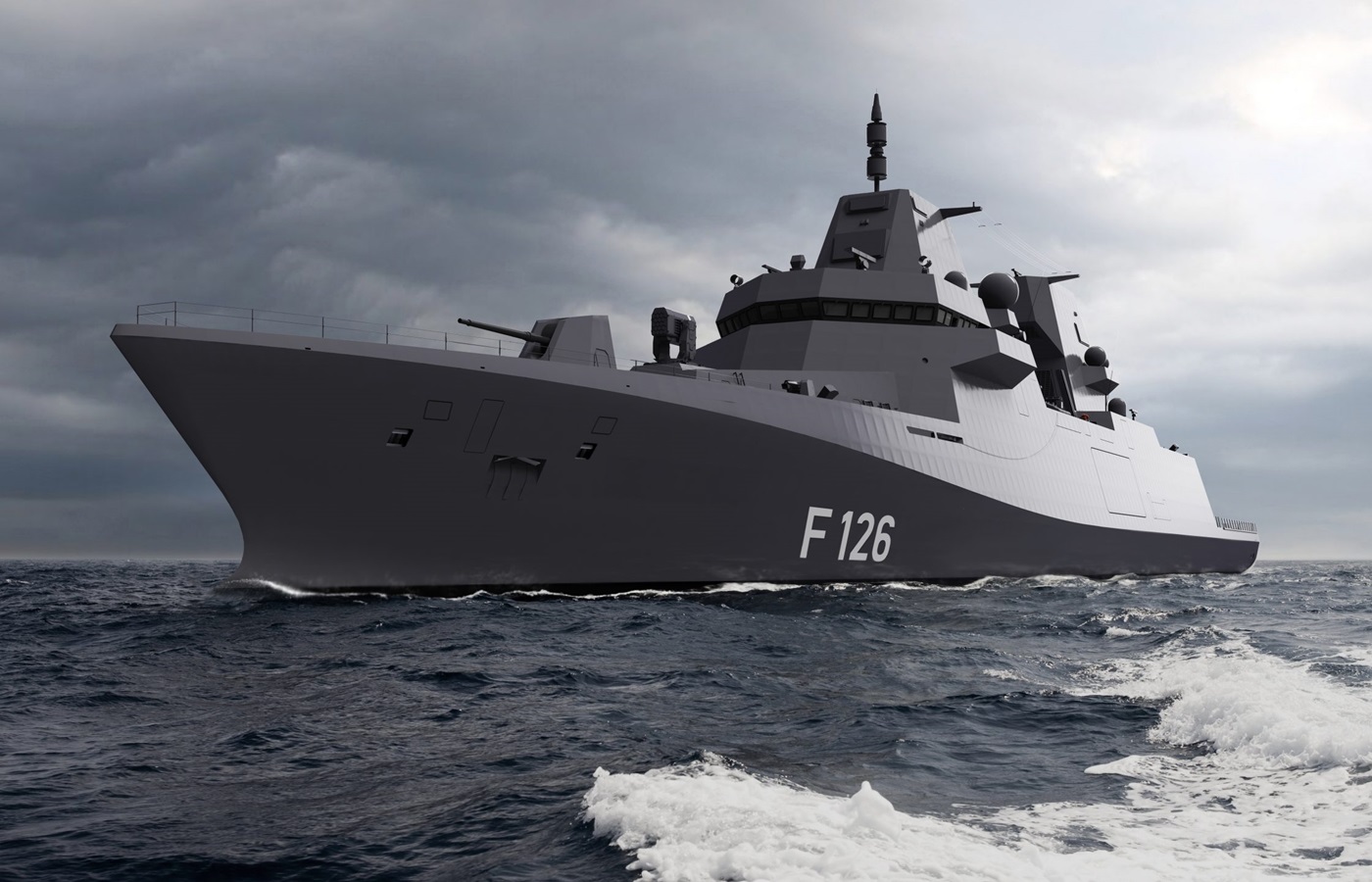
US approves $11.9 billion Aegis combat system sale for German F127 frigates
Europe, News, US April 22, 2026 Comments Off on US approves $11.9 billion Aegis combat system sale for German F127 frigates5 minute read
The United States has approved a possible $11.9 billion sale of the Aegis system to Germany, bolstering its naval defenses against evolving missile threats.
According to an official statement, the U.S. Department of State approved the Foreign Military Sale covering integrated combat systems, radar technology, missile launch systems, and a wide range of supporting equipment and services.
Germany had requested eight full shipsets of the Aegis-based Integrated Combat System, which will be installed on its planned Type 127 (F127) frigates. The package includes key components such as AN/SPY-6(V)1 active electronically scanned array radars and MK 41 vertical launch systems.
The deal also includes Cooperative Engagement Capability systems for data sharing, advanced navigation systems, command and control processors, and multiple radar and electronic warfare systems.
Additional equipment ranges from gun weapon systems and fire control components to cryptographic tools, software, training, spare parts, and logistical support.
“The U.S. Department of State has made a determination approving a possible Foreign Military Sale to the Government of Germany. The estimated total cost is $11.9 billion,” the statement said.

Officials added that the package is designed to support both operational capability and long-term sustainment, including training, technical documentation, and system integration.
Missile Procurement Plans
Alongside the combat systems, Germany is also moving forward with missile acquisitions to arm the new frigates. Previous approvals included a request for Standard Missile-6 (SM-6) Block I and Standard Missile-2 (SM-2) Block IIIC interceptors.
Germany requested up to 173 SM-6 missiles and 577 SM-2 missiles, with an estimated cost of around $3.5 billion.
These ship-launched interceptors are designed for multiple roles, including air defense, missile interception, and surface warfare. They are also capable of engaging ballistic missile threats in both midcourse and terminal phases.
Aegis Combat System
The Aegis Combat System is one of the most advanced naval air and missile defense systems currently in service.
Developed for the U.S. Navy, it integrates radar detection, tracking, weapons control, and decision-making into a single networked architecture.

At its core is a powerful phased-array radar capable of tracking more than 100 targets simultaneously. The system can detect incoming threats, prioritize them, and guide interceptor missiles in real time.
Aegis is widely used across allied navies, including those of Japan, South Korea, Australia, and Spain, making it a key platform for interoperability within NATO and partner forces.
Germany’s F127 Frigates
The approved sale is part of Germany’s broader plan to build a new class of air defense frigates under the F127 program. The German Navy initially planned to acquire six ships, but this has now been expanded to eight in response to a changing security environment.
The new frigates are expected to replace the existing Sachsen-class (F124) ships and will be significantly more capable. They are being designed to handle modern threats, including ballistic and potentially hypersonic missiles.
German defense officials have previously stated that closing the capability gap in countering such threats is a “very high priority” for the navy.
The F127 design is expected to include up to 96 vertical launch cells, allowing it to carry a large number of interceptor missiles. While the final size is not confirmed, estimates suggest the ships could reach or exceed 12,000 tons, making them among the largest frigates in Europe. The vessels are expected to enter service from the mid-2030s.

Shift in Technology and Suppliers
The adoption of the Aegis system represents a shift for Germany, which currently uses European-developed systems on its existing frigates. The move highlights a growing focus on interoperability with U.S. and NATO forces.
The program also reflects broader changes in global defense supply chains. Reports indicate that components for the SPY-6 radar may be produced by Japanese defense electronics firms, showing increased international cooperation even in sensitive technologies.
In addition, Germany may transition from its current naval gun systems to U.S.-made alternatives, including the MK 45 gun. The inclusion of modern remote weapon systems also points to a greater emphasis on defending against emerging threats such as drones.
Strategic implications
U.S. officials said the proposed sale supports broader foreign policy and security objectives by strengthening a key NATO ally.
“This proposed sale will support the foreign policy goals and national security objectives of the United States by improving the security of a NATO Ally,” the statement said.
The deal is expected to enhance Germany’s ability to defend its territory and contribute to collective defense operations. It also improves interoperability between German, U.S., and NATO forces, particularly in integrated air and missile defense missions.

As Europe faces increasing security challenges, including the proliferation of advanced missile technologies, the upgrade of Germany’s naval capabilities signals a shift toward more robust and technologically advanced defense planning.
Related Articles

-

US Navy’s USS Oregon arrives in Norway for Arctic operations
October 13, 2026 -

NATO tests collective defense plans in Steadfast Duel 2026
October 13, 2026


IRIA Exclusive




IRIA Publications
Regions