









Operation Midnight Hammer: How the US targeted Iranian nuclear sites with Bunker Buster bombs
IRIA Staff — June 24, 2025
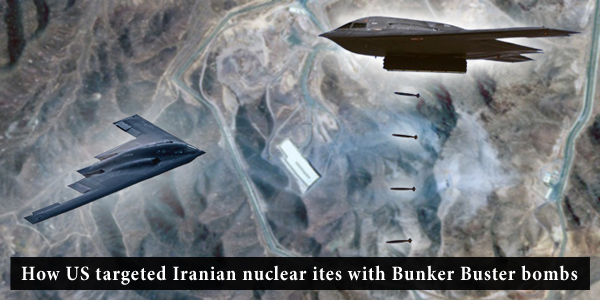
In an unprecedented show of highly coordinated military action codenamed “Operation Midnight Hammer,” the United States executed precision strikes, targeting three of Iran’s key nuclear facilities, Fordow, Natanz, and Isfahan, on June 21, 2025.
Described as the “largest B-2 operational strike in U.S. history,” the mission relied heavily on the GBU-57 Massive Ordnance Penetrator (MOP), a 30,000-pound bunker-buster bomb designed to destroy deeply buried targets.
Authorized by U.S. President Donald J. Trump, the mission has escalated tensions in the Middle East, raising concerns about Iran’s response and the regional stability. This report provides a detailed timeline, background, and an in-depth look at the bunker-buster bombs, as well as an analysis of potential future developments, drawing on the most recent and authentic sources.
Detailed Timeline of Operation Midnight Hammer
The Pentagon, under Secretary of Defense Pete Hegseth and Chairman of the Joint Chiefs of Staff General Dan “Razin” Caine, released the timeline during a June 22 press conference. The 18-hour mission, culminating in 25 minutes of strikes, involved over 125 aircraft, a guided missile submarine, and advanced deception tactics. Below is a detailed chronology of events, reconstructed from Pentagon briefings and corroborated sources.
Friday, June 20, 2025, Midnight
• Seven B-2 Spirit stealth bombers, each with a two-person crew, departed Whiteman Air Force Base, Missouri. A decoy group of B-2s flew west toward Guam to mislead Iranian and global observers, a tactic known only to a select group of planners in Washington. The main strike package proceeded east, maintaining radio silence to ensure stealth during the 18-hour flight.
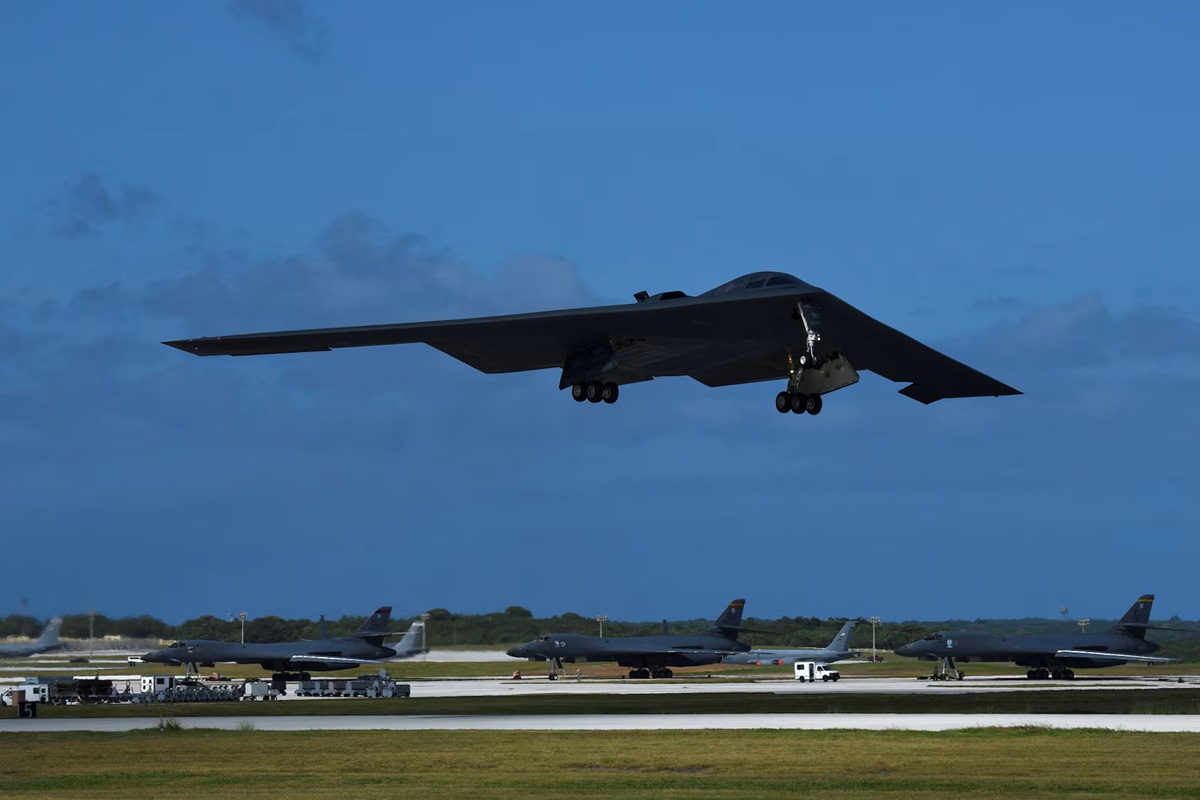 A U.S. Air Force B-2 Spirit bomber takes off from Andersen Air Force Base, Guam, on January 11, 2018. (Image Credit: U.S. Air Force/Airman 1st Class Gerald Willis)
• The B-2s conducted multiple refueling operations over the Atlantic and Mediterranean seas, supported by aerial tankers, enabling the long-range mission without intermediate landings.
Saturday, June 21, 2025, 5:00 PM
• A U.S. guided missile submarine in the U.S. Central Command area launched over 24 Tomahawk cruise missiles targeting surface infrastructure at the Isfahan nuclear facility, weakening Iran’s defenses, and preserving operational surprise.
• As the B-2s neared Iranian airspace, they synchronized with escort aircraft, including fourth- and fifth-generation fighters, in a “complex, tightly timed maneuver” through a narrow airspace, executed with minimal communications to avoid detection.
Saturday, June 21, 2025, 6:40 PM
• The lead B-2 dropped two GBU-57 Massive Ordnance Penetrators (MOPs) on the Fordow nuclear facility, a heavily fortified site buried deep below a mountain. This marked the MOP’s first combat use. Over the next 25 minutes, 14 MOPs were dropped on Fordow and Natanz, while Tomahawk missiles continued to strike Isfahan.
• Decoys and high-speed aircraft countered potential threats as the strike package entered Iranian airspace. Fourth- and fifth-generation fighters cleared the path at high altitude, neutralizing risks from enemy fighters and surface-to-air missiles. High-speed suppression weapons ensured safe passage near Fordow and Natanz.
• General Caine reported that Iran’s air defenses failed to detect the U.S. aircraft. “Iran’s fighters did not fly, and it appears that Iran’s surface-to-air missile systems did not see us,” he said. No shots were fired at the strike package.
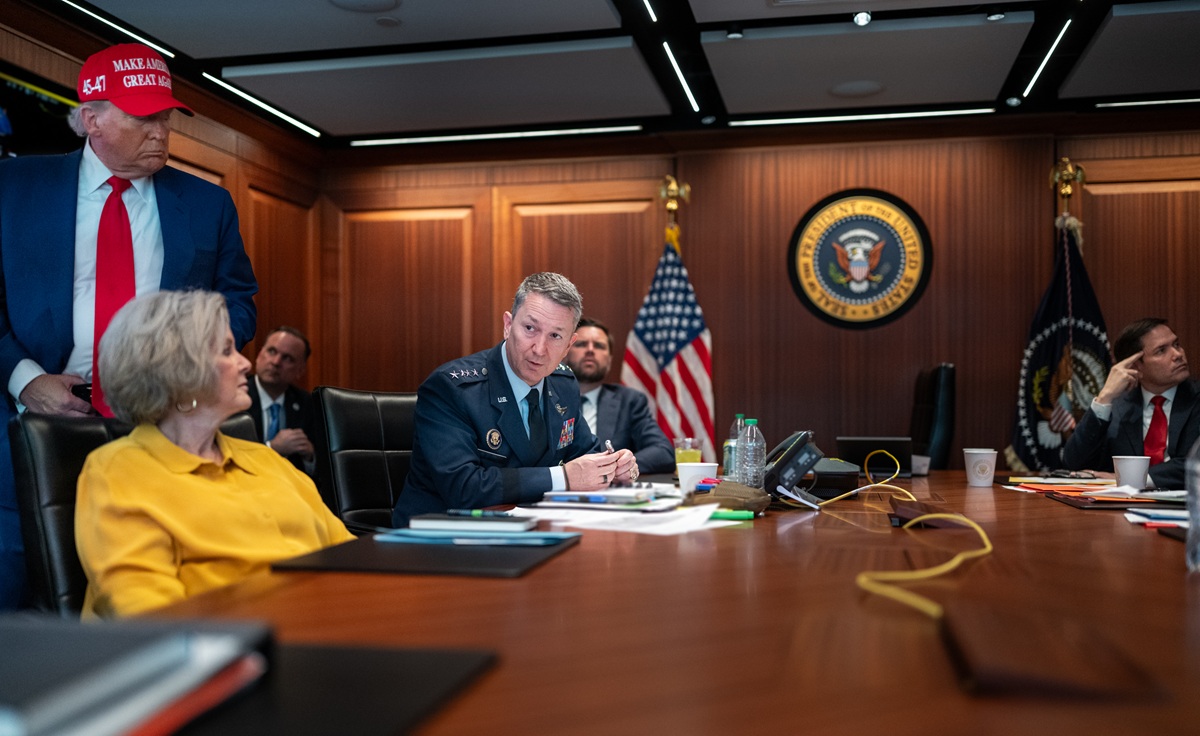 U.S. President Donald Trump with key administration officials in the Situation Room during the U.S. airstrikes on Iran, on June 21, 2025. (Image Credit: White House/via X)
Saturday, June 21, 2025, 7:05 PM
• The Pentagon claimed that all three nuclear sites were hit within a 25-minute window. The B-2s and support aircraft exited Iranian airspace without incident, returning to Whiteman Air Force Base. Initial battle damage assessments indicated “extremely severe damage and destruction” to all sites.
• Congressional leadership was informed only after U.S. planes were safely out of Iranian airspace. White House Press Secretary Karoline Leavitt confirmed bipartisan courtesy calls, though House Democratic Leader Hakeem Jeffries was unreachable until after the strikes.
Sunday, June 22, 2025, Early Morning
• U.S. President Trump addressed the nation, calling the strikes a “spectacular military success” and claiming Iran’s nuclear facilities were “completely obliterated.” He warned of “far greater” attacks if Iran did not pursue peace.
• Defense Secretary Hegseth and Gen. Caine detailed the operation, emphasizing its precision and limited scope. Hegseth clarified that the mission targeted nuclear facilities, not regime change.
• Iran confirmed the strikes but provided minimal details on damage. Iranian officials condemned the U.S. as committing “savage military aggression” and vowed retaliation, launching missiles at Israel that wounded at least 21 people.
Monday, June 23, 2025:
• Maxar Technologies’ satellite imagery revealed extensive damage at Isfahan and Natanz, including a 5.5-meter crater at Natanz’s underground complex. Final battle damage assessments have not been released.
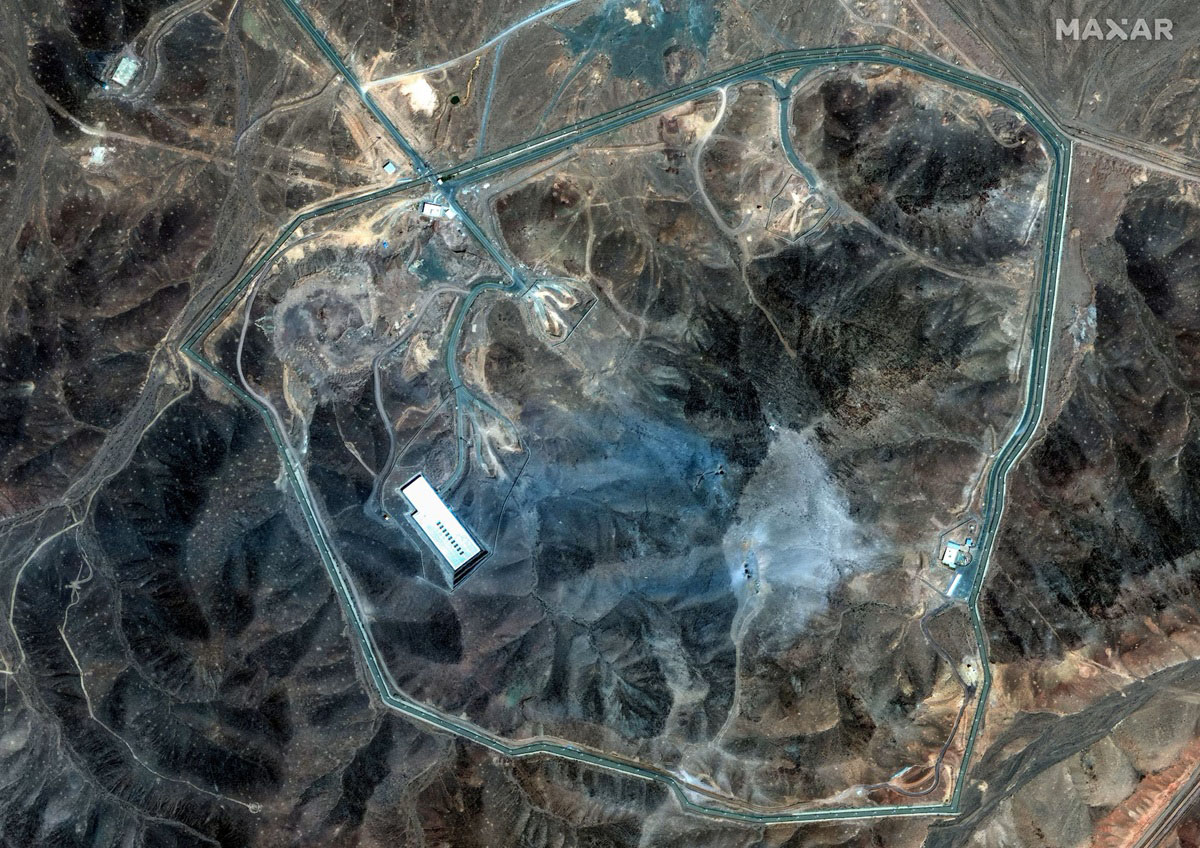 A satellite view shows an overview of Fordow underground complex, after the U.S. struck the underground nuclear facility, near Qom, Iran, on June 22, 2025. (Image Credit: Maxar Technologies)
GBU-57 Massive Ordnance Penetrator (Bunker Buster)
The GBU-57 MOP, also known as the “bunker-buster,” was the centerpiece of Operation Midnight Hammer as it targeted Iran’s deeply buried nuclear facilities. Developed by Boeing for the U.S. Air Force, the MOP is designed to penetrate hardened, underground targets, making it ideal for underground military facilities like Fordow, which is embedded beneath a mountain.
Technical Specifications:
• Weight: Approximately 30,000 pounds (13,600 kg), making it one of the largest non-nuclear bombs in the U.S. arsenal.
• Dimensions: 19.2 feet long and 31.5 inches in diameter, designed to fit in the B-2 Spirit’s bomb bay.
• Warhead: Contains over 5,300 pounds of high explosives, optimized for deep penetration and catastrophic internal damage.
• Penetration Capability: The MOP can penetrate up to 200 feet of reinforced concrete or 60 feet of solid rock before detonating, according to Air Force data. Its hardened steel casing and delayed fuse allow it to burrow through layers of earth and concrete, targeting deeply buried bunkers.
• Guidance System: Equipped with a GPS-guided system, the MOP achieves pinpoint accuracy, critical for striking precise targets like centrifuge halls or command centers. Recent upgrades, completed in 2020, enhanced its ability to counter electronic jamming and improved its accuracy against moving or hardened targets.
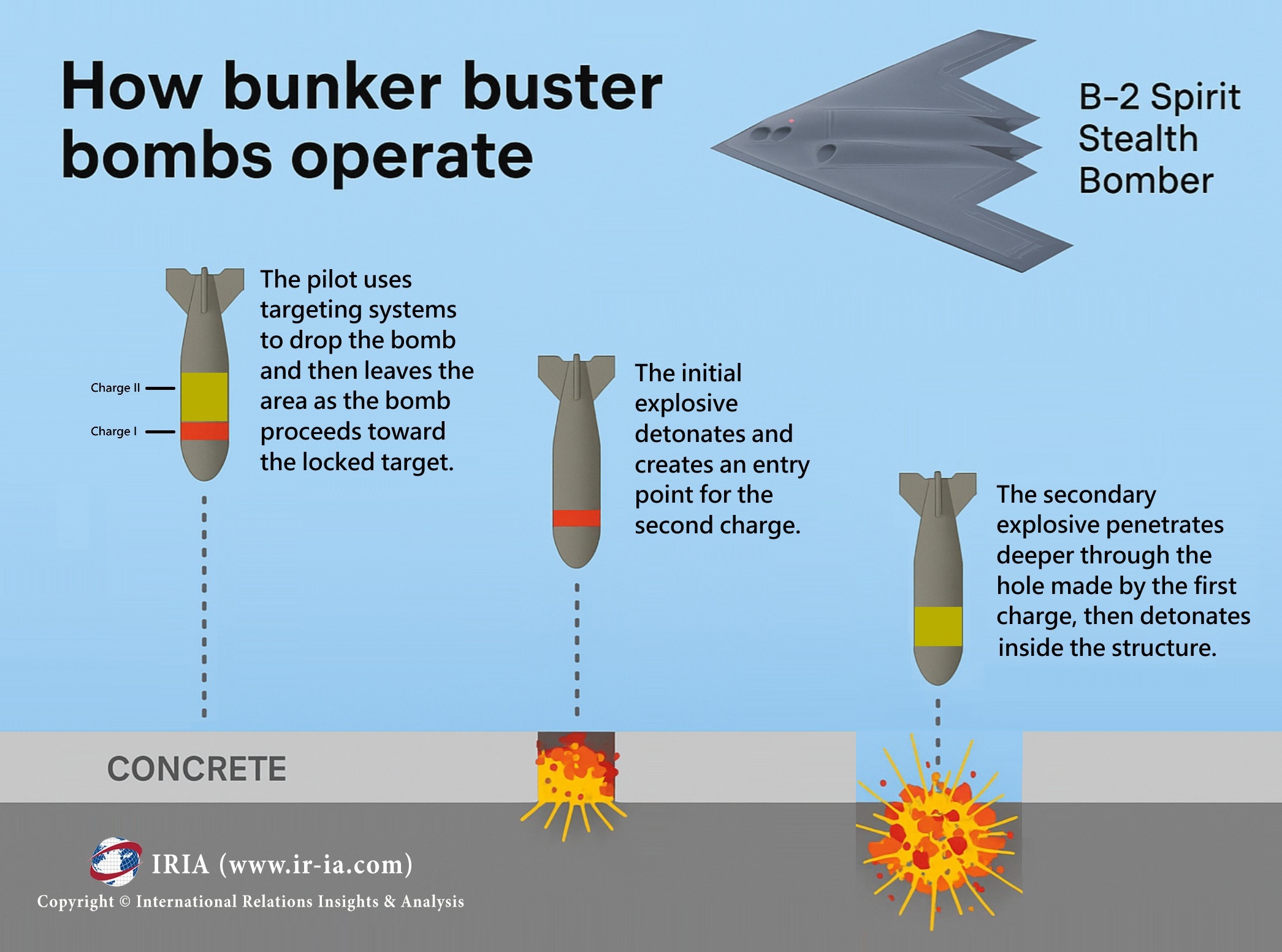
Development and Testing:
The MOP program began in the early 2000s as a response to the growing threat of underground nuclear facilities in countries like Iran and North Korea. The first successful test occurred in 2007 at White Sands Missile Range, New Mexico, where the bomb demonstrated its ability to penetrate deeply buried targets.
By 2011, the Air Force had integrated the MOP into the B-2 fleet, with ongoing enhancements to counter advanced air defenses and fortified structures.
In 2015, U.S. tested its biggest bunker-buster, 30,000-pound (15 tons or 13,608 kilograms), Massive Ordnance Penetrator. During the test, a B-2 Spirit stealth bomber took off from Whiteman Air Force Base in Missouri and dropped the upgraded precision-guided bomb at a testing site at an undisclosed location. According to a 2023 Air Force report, the MOP’s development cost exceeded $400 million, with each bomb costing approximately $3.5 million to produce.
First-ever Combat Deployment:
Operation Midnight Hammer marked the MOP’s first combat deployment. Each B-2 carried two MOPs, with a total of 14 dropped on Fordow and Natanz. The bombs were tailored to their targets:
• Fordow: Buried under 200-300 feet of rock, the Fordow site was possibly severely destroyed in U.S. strikes with multiple MOPs damaging its centrifuge halls and access tunnels. Satellite imagery showed significant surface disruption, suggesting internal structural failure. However, some experts say that the site is too deeply buried to assess the full extent of damage.
• Natanz: The underground enrichment facility at Natanz, protected by concrete and earth, was struck with MOPs to destroy centrifuge cascades. A 5.5-meter crater at the site indicates the bombs penetrated deeply before detonating.
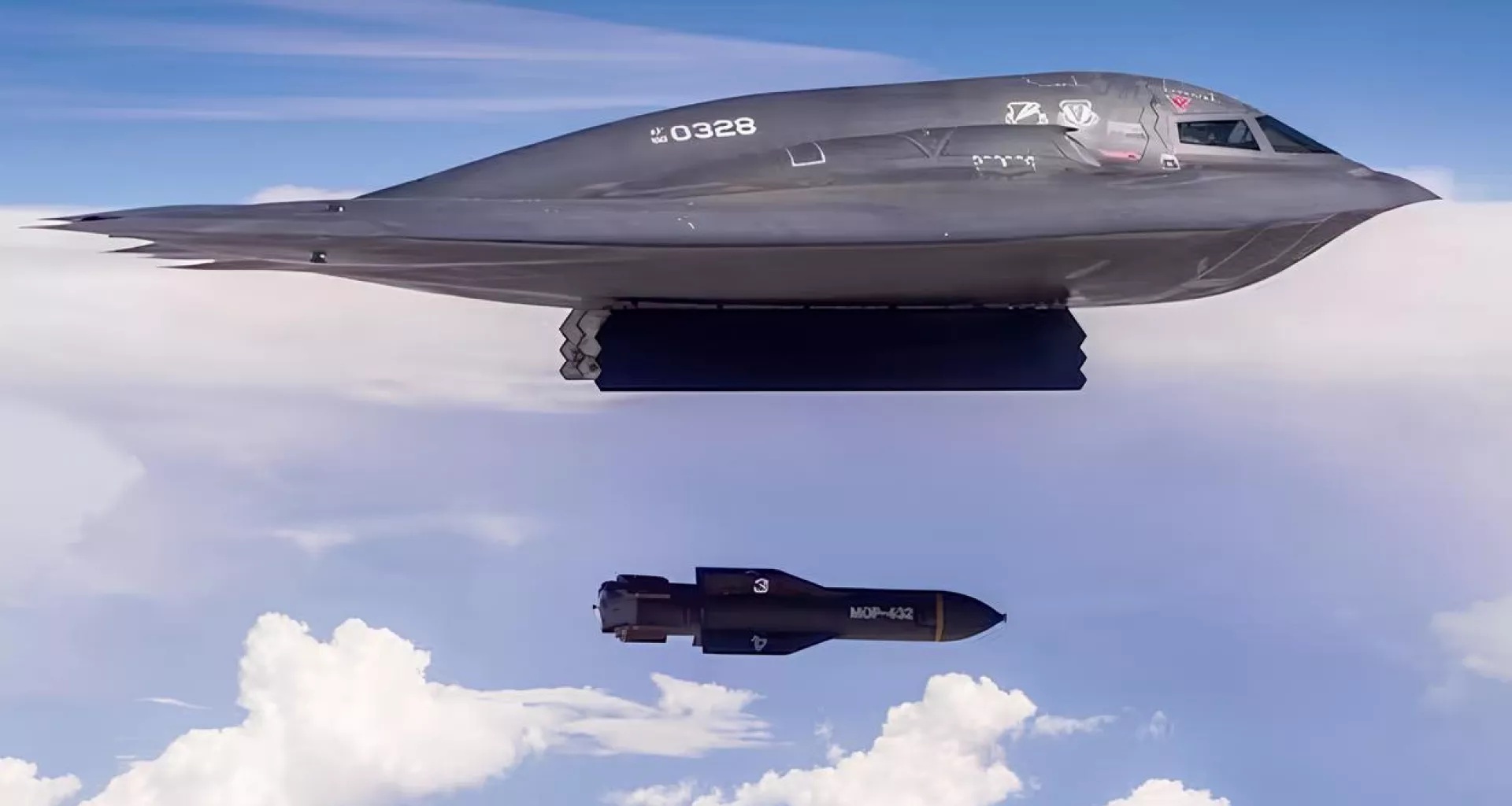 B-2 Spirit bomber dropping a GBU-57 bunker buster bomb. (Image Credit: USAF/X)
The MOP’s effectiveness relied on the B-2’s stealth capabilities, which allowed the bombers to deliver the bombs undetected. General Caine noted that the MOP’s “unique penetration and destructive power” ensured “catastrophic damage” to Iran’s nuclear infrastructure, setting back its program by years, if not decades.
Strategic Significance and Implications
The use of Bunker Buster bombs underscores the U.S. military’s ability to neutralize even the most fortified targets, sending a strong message to adversaries. However, its deployment raises ethical and strategic questions, as the bomb’s destructive power could cause significant collateral damage in urban areas, though the Pentagon emphasized that the strikes targeted remote facilities.
The origins of Operation Midnight Hammer stem from escalating tensions over Iran’s nuclear program. Israel’s intensified strikes on Iranian proxies in Lebanon, Syria, and Yemen have weakened Tehran’s regional influence, eventually leading to Israeli airstrikes targeting Iran’s nuclear and military infrastructure.
At the start of the Israel-Iran conflict, President Trump issued a two-week ultimatum for Tehran to dismantle its nuclear program. However, two days after the announcement on June 21, Trump approved the strikes after consultations with Hegseth, who warned that the window for action was closing. The operation was planned within days, leveraging decades of U.S. war-gaming against Iran’s nuclear sites.
Hegseth stressed that the strikes were “intentionally limited” to nuclear facilities, despite Trump’s Truth Social post hinting at regime change: “If the current Iranian Regime is unable to MAKE IRAN GREAT AGAIN, why wouldn’t there be a Regime change???”
As General Caine stated, “No other military in the world could have done this,” Operation Midnight Hammer, powered by the GBU-57 MOP, showcased the U.S. military’s unparalleled ability to strike fortified targets, dealing a severe blow to Iran’s nuclear ambitions. Yet, the mission’s success comes with risks, as Iran’s vowed retaliation threatens regional stability. The world now watches to see if Midnight Hammer will lead to peace or ignite a larger conflict.
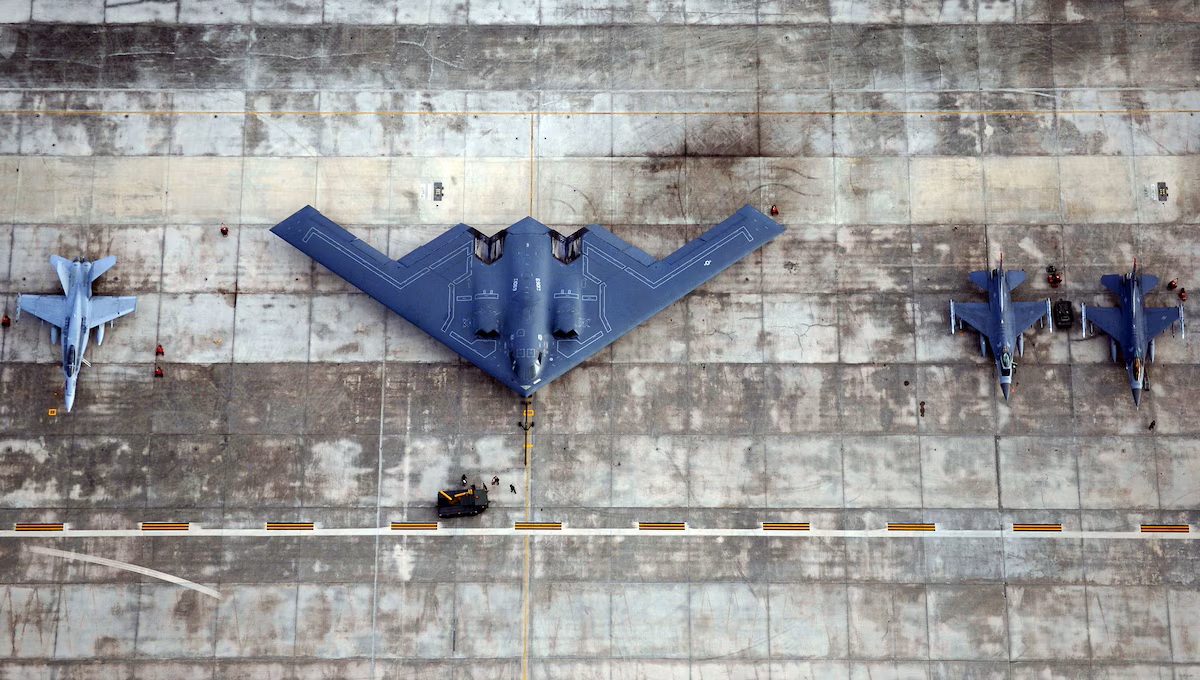 A B-2 Spirit, two F-16 Fighting Falcons and an F-18 Hornet sit on the flightline at Andersen Air Force Base, Guam, for Exercise Valiant Shield. (Image Credit: U.S. Air Force/Staff Sgt. Bennie J. Davis III)
Iran Strikes back with Missile Attack on U.S. Bases in the Region
On the night of June 24, Iran launched 14 missiles targeting U.S. military bases in Qatar, triggering alarms and potential threat alerts in Bahrain, Kuwait, and Iraq as well. Al Udeid Air Base in Qatar, the largest American installation in the Middle East, was among the primary targets. Approximately 10,000 U.S. personnel are stationed at the base, a critical logistics hub and the regional headquarters of U.S. Central Command.
The strike, which Iranian officials described as retaliation for recent U.S. airstrikes on three key Iranian nuclear facilities, has intensified fears in Washington and across the region of a broader conflict spiraling out of control. According to U.S. and Qatari officials, the missiles fired by Iran were short- and medium-range ballistic weapons. The Pentagon confirmed no casualties and stated that damage assessments were ongoing.
Iran provided early notice of the attack via diplomatic channels to both the U.S. and Qatari governments. While this gesture helped avoid casualties, it also signaled Tehran’s intention to demonstrate resolve without escalating into full-scale war.
Following the attack, Iran’s Supreme Leader Ayatollah Ali Khamenei declared: “We have not attacked anyone, and we absolutely do not accept anyone’s aggression, nor will we submit to it. This is the logic of the Iranian nation.” Iran has also threatened to close the Strait of Hormuz, a strategic chokepoint through which nearly 20 million barrels of oil, roughly 20% of global consumption, passed daily in 2024. Any disruption there would carry significant global economic implications and heighten the risk of direct confrontation with the United States.
After Iranian attack on US military base, President Trump acknowledged the early warning in a social media post on Truth Social: “I want to thank Iran for giving us early notice, which made it possible for no lives to be lost, and nobody to be injured. Perhaps Iran can now proceed to Peace and Harmony in the Region, and I will enthusiastically encourage Israel to do the same.”
Soon after President Trump announced that both Iran and Israel had agreed to a “complete and total” ceasefire. Israel and Iran acknowledged the ceasefire but both warned that they will respond to any violation.
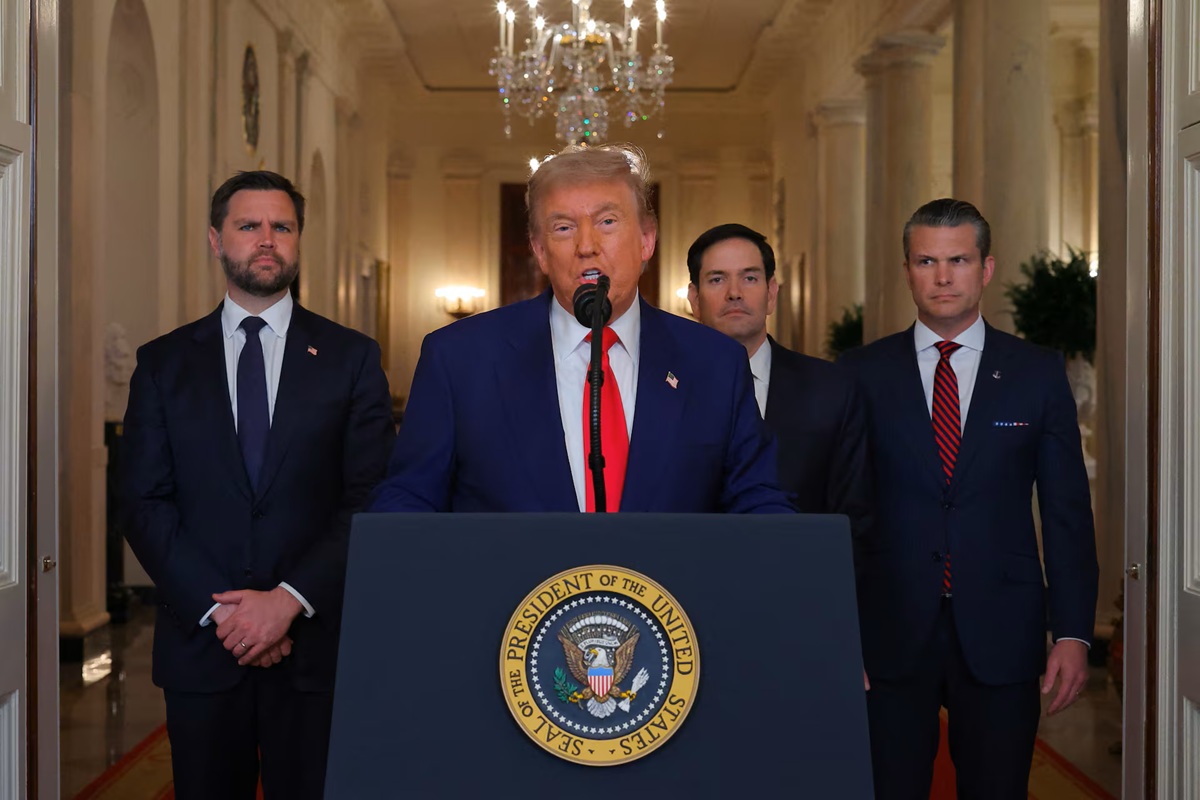 U.S. President Donald Trump delivers an address to the nation alongside U.S. Vice President JD Vance, U.S. Secretary of State Marco Rubio and U.S. Defense Secretary Pete Hegseth at the White House in Washington, D.C., U.S. June 21, 2025, following U.S. strikes on Iran's nuclear facilities. (Image Credit: Reuters/Carlos Barria)
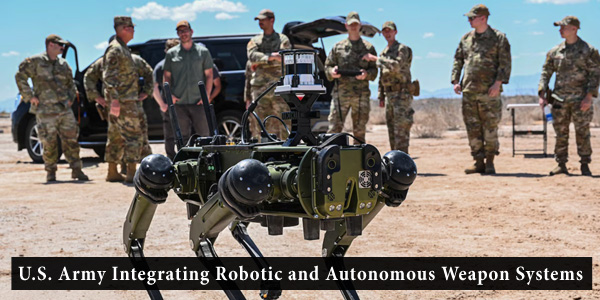 US Army's Advanced Autonomous Weapon Systems
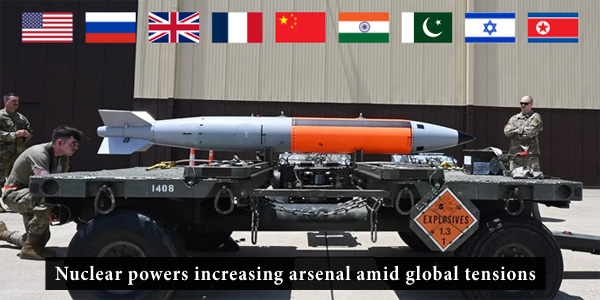 World Nuclear Powers Increasing Arsenal Amid Global Tensions
Regions




Issues