


UK, Canada, and Australia recognize Palestine as a state, infuriating Israeli leadership
Americas, Asia-Pacific, Europe, Middle East, News September 22, 2025 Comments Off on UK, Canada, and Australia recognize Palestine as a state, infuriating Israeli leadership6 minute read
The United Kingdom, along with Canada and Australia, has formally recognized a Palestinian state, more than a century after the 1917 Balfour Declaration, which promised “a national home for the Jewish people” in Palestine, and 77 years after the creation of Israel.
British Prime Minister Keir Starmer announced on Sunday, following days of discussion. Starmer called it a step to preserve the possibility of peace and a two-state solution. “In the face of the growing horror in the Middle East, we are acting to keep alive the possibility of peace and of a two-state solution,”
The decision was made alongside coordinated recognitions by Canada and Australia, coming just two days before the start of the 80th session of the United Nations General Assembly in New York.
The UK government had long maintained that recognition of Palestine would be withheld until a “moment of maximum impact” in the peace process. However, the worsening humanitarian crisis in Gaza and Israeli military operations pushed the government to act earlier than previously expected.
Canadian Prime Minister Mark Carney said recognition of Palestine was intended to empower those pursuing peaceful coexistence. “Recognizing the State of Palestine, led by the Palestinian Authority, empowers those who seek peaceful coexistence and the end of Hamas. This in no way legitimizes terrorism, nor is it any reward for it,” he said.
Today, Canada recognises the State of Palestine. pic.twitter.com/zhumVJRBfe
— Mark Carney (@MarkJCarney) September 21, 2025
Carney noted that the Palestinian Authority had committed to governance reforms, holding elections next year, and preventing Hamas from playing any role in the new state.
In Canberra, Prime Minister Anthony Albanese and Foreign Minister Penny Wong issued a joint statement stressing that recognition was part of a global effort to advance a two-state solution. “Our decision is meant to revive momentum for a two-state solution that begins with a ceasefire in Gaza and the release of captives,” Albanese said.
Gaza and the West Bank Under Siege
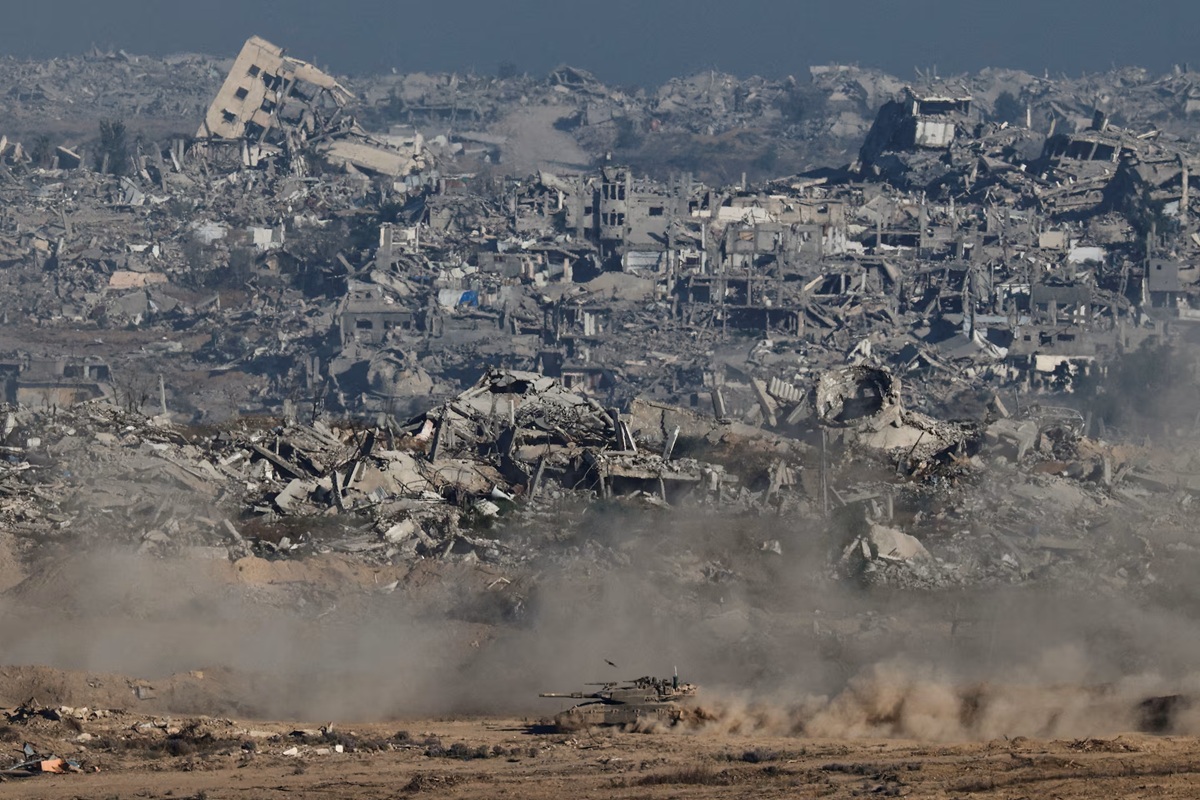
The decision comes against the backdrop of Israel’s continuing war in Gaza, where more than 65,200 Palestinians have been killed. Israel’s campaign has reduced much of Gaza City to rubble, displaced hundreds of thousands, and left large parts of the enclave facing famine.
Daily raids and settler attacks have also intensified across the occupied West Bank. Israel has advanced settlement plans and taken steps toward annexation, threatening to permanently block the prospect of a contiguous Palestinian state with East Jerusalem as its capital.
Palestinian Foreign Minister Varsen Aghabekian Shahin welcomed the recognition, calling it “a message of hope to the Palestinian people, a message of hope for a free, independent, sovereign state”. She added that the move also affirmed that “Israel has no sovereignty on the territories of our state”.
Foreign Secretary Yvette Cooper described the announcement as “historic” and underscored Britain’s “unwavering commitment to a two-state solution”. Deputy Prime Minister David Lammy cautioned that recognition would not bring about a Palestinian state overnight but emphasized that the step was necessary to “keep alive the prospects of a two-state solution”.
Starmer also stressed that recognition of Palestine did not equate to support for Hamas. He described the group as a “brutal terrorist organisation that wants to see Israel destroyed,” adding, “A call for a genuine two-state solution is the exact opposite of their hateful vision.”
Palestinian officials hailed the move as overdue but significant. Aghabekian described Israeli actions as a “systematic assault on the very fabric of humanity”.
In the UK, Layla Moran, the first MP of Palestinian descent, called the decision a rectification of a “decades-long injustice”. She said, “This is a small step; the way we should see it is the beginning of a journey. It is important that this translates now into changes on the ground. It shouldn’t have taken us a genocide to get to this point.”
Israeli Response
Israeli Prime Minister Benjamin Netanyahu condemned the recognition, calling it a “prize” for Hamas. “It will not happen. A Palestinian state will not be established west of the Jordan River,” he said, promising an official response after returning from a visit to the United States.
Far-right Israeli ministers intensified their calls for annexing the West Bank. National Security Minister Itamar Ben-Gvir said he would propose the “immediate application of Israeli sovereignty”. Yitzhak Wasserlauf of the Otzma Yehudit party declared, “The Land of Israel belongs exclusively to the people of Israel, there is no Palestinian people and no Palestinian state.”

The recognition by the UK, Canada, and Australia added to growing global support for Palestinian statehood. France has signaled it will follow, and Saudi Arabia will co-host a UN summit on a two-state solution alongside France in New York on Monday.
Currently, 147 of the 193 UN member states have recognized Palestine, but the country still lacks a full seat at the UN, which requires approval by the Security Council. The United States has already pledged to veto any such proposal, aligning with Israel’s opposition.
U.S. President Donald Trump, who was in the UK on a state visit last week, expressed his disagreement with Starmer’s decision. “This matter was among our few disagreements,” Trump said after meeting the British prime minister.
Mounting Pressure on Israel
While recognition of Palestine remains largely symbolic, it underscores Israel’s increasing diplomatic isolation. Western countries have begun imposing sanctions on Israel, and several European states, including Spain, Ireland, and the Netherlands, have threatened to boycott international events such as the Eurovision Song Contest if Israel participates.
Netanyahu himself acknowledged the shifting landscape, saying last week that Israel was “in a sort of isolation” and would need to adjust its economy accordingly.
Today, Canada recognises the State of Palestine. pic.twitter.com/zhumVJRBfe
— Mark Carney (@MarkJCarney) September 21, 2025
The coordinated recognition of Palestinian statehood by the UK, Canada, and Australia marks a historic shift in the positions of major Western allies of Israel. While largely symbolic for now, the move sends a powerful message of international disapproval of Israel’s war in Gaza and expanding occupation in the West Bank.
Whether this recognition translates into meaningful political change remains uncertain. Still, it signals that the longstanding global consensus on a two-state solution may be gaining renewed traction after years of stagnation.
Australia Canada Conflict Europe Gaza Genocide Hamas Humanitarian Crisis Israel Middle East Palestine UK United Kingdom
Related Articles


IRIA Exclusive




IRIA Publications
Regions






