Four UN Security Council permanent members oppose Israel’s Gaza occupation plan; Netanyahu defends new military offensive
Middle East, News, US August 12, 2025 Comments Off on Four UN Security Council permanent members oppose Israel’s Gaza occupation plan; Netanyahu defends new military offensive6 minute read
Four of the five permanent members of the United Nations Security Council (UNSC) condemned Israel’s plan to fully occupy Gaza during an emergency meeting on August 10, 2025. The United States was the only major power offering support to Israeli Prime Minister Netanyahu’s controversial move.
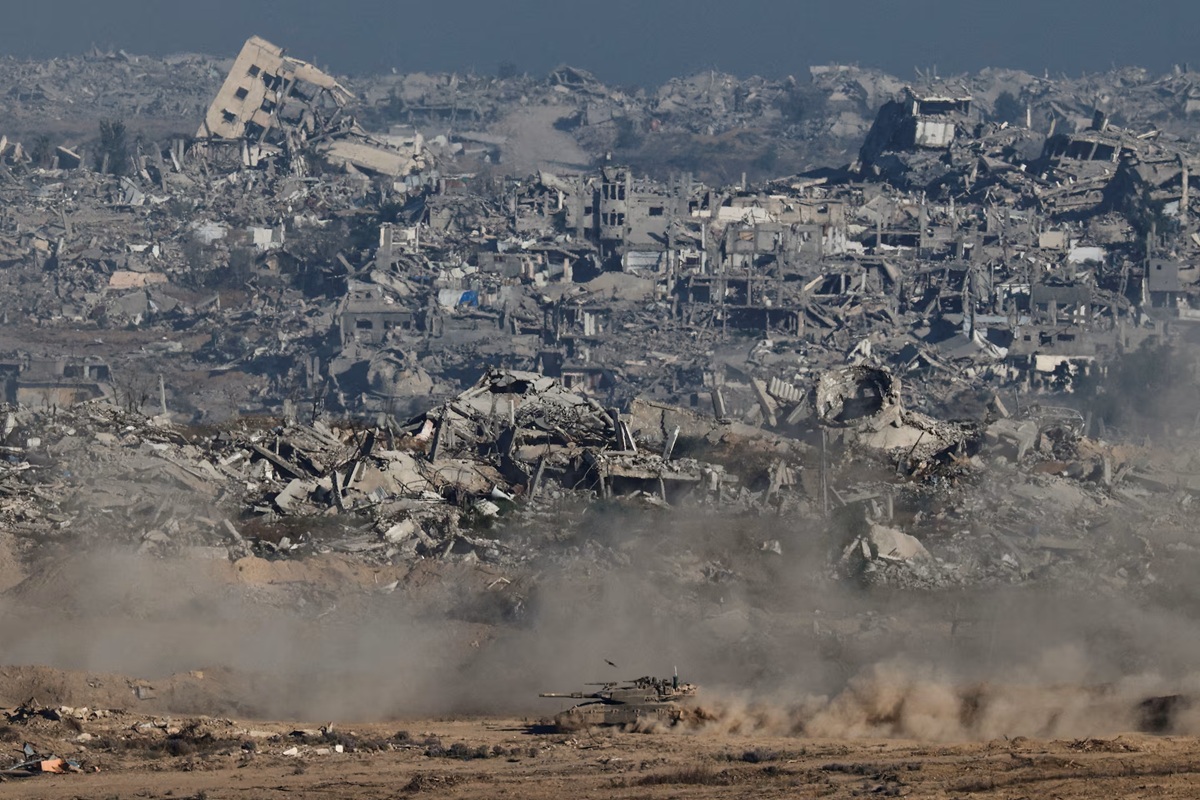
Russia, China, the United Kingdom, and France criticized the Israeli Security Cabinet’s approval of Netanyahu’s “gradual plan” to take control of Gaza City, displace Palestinians from the north to the south of the enclave, and dismantle what Israel says are Hamas strongholds. The plan has been widely denounced as a violation of international law and a step toward permanent occupation.
Despite the global backlash, Netanyahu defended the new military offensive in Gaza declaring that Israel “has no choice but to finish the job and complete the defeat of Hamas.”
Russia accuses Israel of deception
Russian Deputy Permanent Representative Dmitry Polyanskiy described the decision as “a gross violation of international law” and accused Israeli leaders of “blatant disregard for the appeals of the international community.”
He alleged that Foreign Minister Gideon Sa’ar had misled the Council in a previous appearance, claiming concern for hostages while knowing the Cabinet had already approved the occupation plan.
Moscow warned that the move would only escalate tensions, further destabilize the region, and deepen humanitarian suffering in Gaza, where food shortages and mass displacement have already reached critical levels.
China says Gaza is Palestinian territory
China’s UN Permanent Representative Fu Cong called on Israel to “stop this dangerous move at once,” stressing that “Gaza belongs to the Palestinian people” and is “an integral part of the Palestinian territory.”
Fu said any attempt to alter Gaza’s demographic or territorial character must be “met with utmost rejection and resistance” and warned against the “illusion of military supremacy.” He urged Israel to comply with its obligations under international humanitarian law by lifting aid restrictions and opening all border crossings.

UK and France oppose Israeli plan
UK Deputy Permanent Representative James Kariuk told the Council that Israel’s decision was “wrong” and would “do nothing to bring an end to this conflict.” He said the expansion of military operations risked worsening the humanitarian crisis and would not secure the release of the hostages.
France’s Deputy Permanent Representative Jay Dharmadhikari echoed those concerns, declaring that Paris has “firm opposition to any plan for the occupation, annexation, and settlement of the Gaza Strip.” He warned that implementing the decision “will in no way contribute to the security of Israel and its nationals.”
UN members condemn Israel’s plan
Beyond the criticism, five Council members, Britain, France, Denmark, Greece, and Slovenia, issued a joint statement urging Israel to “urgently reverse this decision and not to implement it.” Slovenia’s UN Ambassador Samuel Zbogar said the plan “risks violating international humanitarian law” and described Gaza’s worsening conditions as “a manmade crisis.”
“Children are dying from starvation,” Zbogar said. “Hunger is so severe that desperate civilians are taking the risk of getting killed at aid distribution sites to feed their families.” The group called for an immediate ceasefire, the release of hostages, and a renewed push toward a two-state solution.
The Israeli Government’s decision to escalate its offensive in Gaza is wrong, we urge it to reconsider.
— UK at the UN 🇬🇧🇺🇳 (@UKUN_NewYork) August 9, 2025
This will do nothing to end the conflict and suffering in Gaza.
We need a ceasefire, all hostages released and a surge in aid.
🇬🇧🇩🇰🇫🇷🇬🇷🇸🇮 have called an urgent UNSC meeting. pic.twitter.com/z8AItyvFMr
UN Assistant Secretary-General Miroslav Jenca warned that implementation of the plan would “likely trigger another calamity in Gaza, reverberating across the region and causing further forced displacement, killings, and destruction.”
Ramesh Rajasingham, a senior official at the UN’s humanitarian office, said the hunger crisis in Gaza was no longer looming: “This is starvation, pure and simple.”
US stands by Israel
In stark contrast, U.S. Acting Deputy Representative Dorothy Shea defended Israel’s “right to defend itself,” blaming Hamas for the continuation of the war. “The war could end today if Hamas let the hostages go,” she told the Council. Shea accused some members of using the meeting to “accuse Israel of genocide,” calling such allegations “demonstrably false.”
Washington continues to support Netanyahu’s plan, which his government argues is necessary to “free Gaza from Hamas” and secure the release of hostages.
Netanyahu defiant in press conference
Speaking to reporters in Jerusalem, Netanyahu rejected calls from the UN and allied governments to reverse the occupation plan. He said the offensive would move “fairly quickly” and was “the best way” to end the war.
Netanyahu claimed Israeli hostages held in Gaza were “the only ones being deliberately starved” and accused Hamas of looting aid shipments. He dismissed international media coverage of starving Palestinian children as “fake” and accused global outlets of “buying into Hamas propaganda.”

The Israeli leader said the Israel Defense Forces (IDF) had orders to dismantle “the two remaining Hamas strongholds” in Gaza City and the central area around al-Mawasi. He outlined a three-step humanitarian initiative, including safe corridors for aid distribution, increased air drops, and more distribution points managed by the controversial U.S.- and Israeli-backed Gazan Humanitarian Foundation (GHF).
The UN has reported that 1,373 Palestinians have been killed since late May while seeking food at GHF sites, with aid deliveries often taking place in chaotic and dangerous conditions. Netanyahu said, “A lot of firing was done by Hamas” at those sites.
Protests in Israel
Thousands of Israelis protested over the weekend against the government’s plan, warning it endangered the remaining hostages. Families of those held in Gaza marched in Tel Aviv, demanding that Netanyahu prioritize negotiations over military action.
The prime minister confirmed that he had spoken with U.S. President Donald Trump about the operation, but gave no details of the conversation.
Legal and diplomatic pressure mounts
Israel already faces two major international legal challenges over its Gaza campaign. In November 2024, the International Criminal Court issued arrest warrants for Netanyahu and former Defense Minister Yoav Gallant for alleged war crimes and crimes against humanity. The International Court of Justice is also hearing a case accusing Israel of genocide in Gaza.
The latest plan for a full occupation of Gaza has added to mounting diplomatic isolation for Israel, with even some of its traditional partners warning that it risks further destabilization of the region and long-term damage to any prospects for peace.
China Conflict France Gaza Hamas Humanitarian Crisis Israel Middle East Palestine Russia Security U.S. UK UN United Kingdom United Nations UNSC
Related Articles


IRIA Exclusive




IRIA Publications
Regions