


Arab and Islamic states condemn US envoy’s remarks on Israeli control of occupied Arab territories
Middle East, News, US February 23, 2026 Comments Off on Arab and Islamic states condemn US envoy’s remarks on Israeli control of occupied Arab territories5 minute read
Tensions across the Middle East have intensified after comments attributed to U.S. Ambassador to Israel Mike Huckabee suggesting it would be acceptable for Israel to exercise control over Arab territories, including the occupied West Bank.
The remarks prompted swift and coordinated condemnation from 14 Arab and Islamic countries, alongside major regional organizations, who described the statements as dangerous, inflammatory, and in violation of international law.
In a joint statement issued in Arabic and English, the foreign ministries of Egypt, Saudi Arabia, Jordan, Bahrain, the United Arab Emirates, Qatar, Indonesia, Pakistan, Turkiye, Syria, Palestine, Kuwait, Lebanon, and Oman rejected any suggestion that Israel could claim sovereignty over occupied Palestinian territory or any other occupied Arab land.
The statement was also endorsed by the Gulf Cooperation Council, the League of Arab States, and the Organization of Islamic Cooperation, giving it broad diplomatic weight across both Arab and wider Islamic institutions.
The signatories described the ambassador’s remarks as “dangerous and inflammatory” and a “flagrant violation” of international law and the United Nations Charter. They warned that such statements threaten regional security and stability, particularly at a time of heightened tensions and stalled peace negotiations.
Rejection of Annexation and Settlement Expansion
The joint statement flatly rejected any attempt to legitimize Israeli sovereignty over occupied Palestinian territory, including the West Bank, or any other Arab lands under occupation. It reiterated opposition to annexation plans, settlement expansion, and any effort to separate the West Bank from the Gaza Strip.
The countries emphasized that Israel has no sovereignty over the occupied Palestinian territory and reaffirmed support for the Palestinian people’s right to self-determination. They called for the establishment of an independent Palestinian state along the June 4, 1967 lines, a formulation long associated with the two-state solution framework.
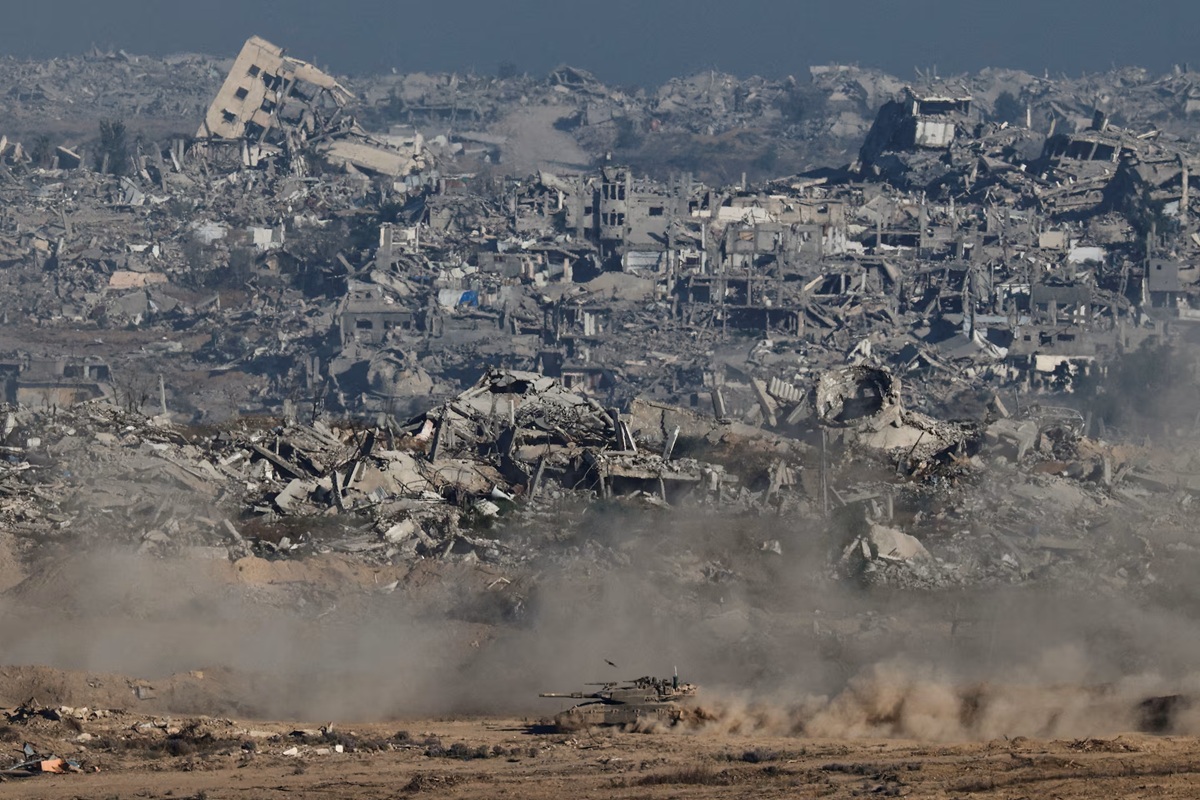
The statement warned that continued expansionist policies and unlawful measures would only deepen violence and conflict, further eroding prospects for a negotiated settlement. It also called for an end to what it described as incendiary rhetoric that could inflame tensions in an already volatile region.
The breadth of the coalition, spanning key Gulf states, frontline Arab countries, and major Islamic actors beyond the Middle East, such as Indonesia and Pakistan, underscored the unified stance against any perceived shift in policy that could legitimize permanent control over occupied lands.
Concerns over Regional Stability
The remarks attributed to Ambassador Huckabee reportedly suggested that Israel taking control of lands claimed by Arab states would be acceptable. Several governments called on the United States to clarify its official position and reaffirm its commitment to international law and established diplomatic frameworks.
In a notable passage, the joint statement said the envoy’s comments contradict the vision put forward by U.S. President Donald Trump and the broader plan aimed at ending the Gaza conflict. The signatories said that the framework is based on containing escalation and creating a political horizon for a comprehensive settlement that ensures an independent Palestinian state.
That language appeared designed not only to reject the ambassador’s remarks but also to distinguish them from what Arab capitals describe as an acceptable diplomatic track focused on de-escalation and a negotiated outcome.
By referencing Washington’s stated objectives, the statement signaled that regional governments remain open to engagement, provided it aligns with international law and the two-state solution.
The controversy comes amid growing international concern over Israeli policies in the West Bank, including settlement activity and administrative measures that some diplomats and United Nations officials have warned could amount to creeping annexation. Recent reporting has highlighted widening backlash against such measures and fears that they may irreversibly undermine the viability of a two-state solution.

Diplomatic Engagement Amid Rising Tensions
Against this backdrop, regional diplomacy has continued in parallel with public condemnations. Qatar’s Prime Minister and Minister of Foreign Affairs, Sheikh Mohammed bin Abdulrahman bin Jassim Al-Thani, held a phone call with Iran’s Foreign Minister Abbas Araghchi, according to a statement carried by the Qatar News Agency.
The discussion focused on efforts to de-escalate tensions and support continued negotiations between the United States and Iran. The call highlighted ongoing diplomatic engagement aimed at containing broader regional instability, even as disputes over Israeli policies and territorial questions intensify.
For Egypt and several other Arab states, the joint condemnation fits into a broader policy approach combining support for de-escalation in Gaza, rejection of any displacement of Palestinians, and insistence on a political settlement anchored in Palestinian statehood.
Cairo and other capitals have repeatedly stressed that unilateral measures altering the status of occupied territories risk triggering further violence and destabilizing the region.
Regional leaders warned that rhetoric appearing to legitimize control over Arab lands only inflames tensions and makes peace harder to achieve. They argued that maintaining a credible political horizon based on internationally recognized borders remains essential to preventing further escalation.
The unified statement marks one of the more coordinated diplomatic responses in recent months, bringing together both Arab governments and major Islamic organizations under a single message on sovereignty, occupation, and the future of the Palestinian territories.
As tensions remain high, governments across the region are pressing for clarity from Washington and renewed commitment to internationally recognized principles as the basis for any lasting settlement.

Related Articles


IRIA Exclusive




IRIA Publications
Regions






