









Japan’s Nuclear Revival Faces Major Hurdles
M. Ahsan - August 20, 2026
Japan is pushing to restore nuclear power to a larger role in its electricity system, more than 15 years after the Fukushima Daiichi accident led to the prolonged shutdown of most of the country’s nuclear fleet. The shift is being driven by concerns over imported fossil fuels, rising electricity demand, decarbonization and the need for a more resilient energy system. Japan’s Seventh Strategic Energy Plan, approved in February 2025, sets a target for nuclear power to provide about 20% of electricity generation in fiscal year 2040, alongside a 40–50% share for renewables and 30–40% for thermal power.
The policy represents a significant change from the years immediately after Fukushima, when nuclear generation collapsed and fossil fuels filled much of the gap. Yet bringing nuclear power back on a larger scale is proving difficult. Reactors must satisfy stringent post-Fukushima safety requirements, much of the existing fleet is aging, and Japan has still not resolved the long-term disposal of high-level radioactive waste. Public acceptance also remains an important factor in determining whether individual projects can move ahead.
Post-Fukushima Recovery
The Fukushima Daiichi accident in March 2011 fundamentally altered Japan’s nuclear industry. The shutdown of reactors forced utilities to increase their reliance on LNG, coal and oil to maintain electricity supplies. The International Energy Agency’s review of Japan’s energy policy found that the loss of nuclear generation contributed to higher fossil-fuel use, increased fuel imports and rising electricity costs.
Japan subsequently established the Nuclear Regulation Authority (NRA) and introduced much tougher safety requirements. The new framework strengthened protections against earthquakes and tsunamis and introduced requirements covering severe accidents, loss of power, cooling failures, fire, flooding and other hazards. Existing reactors are also subject to back-fitting, meaning operators must bring facilities into compliance with revised standards rather than relying solely on the rules that applied when the plants were originally built.
The approval process is consequently extensive. The NRA’s regulatory framework requires reviews of reactor installations, construction plans and operational safety programs, followed by inspections before and during operation. The system is designed to incorporate lessons from Fukushima, but it has also made reactor restarts a lengthy process.
The current fleet status illustrates the scale of Japan’s nuclear recovery. The NRA’s reactor-status data, updated on August 20, 2026, lists 11 operating reactors, 22 suspended reactors and 20 reactors under decommissioning. The six Fukushima Daiichi reactors are classified as being in decommissioning. The figures highlight both the progress made since Fukushima and the large number of reactor units that remain unavailable or are being permanently retired.
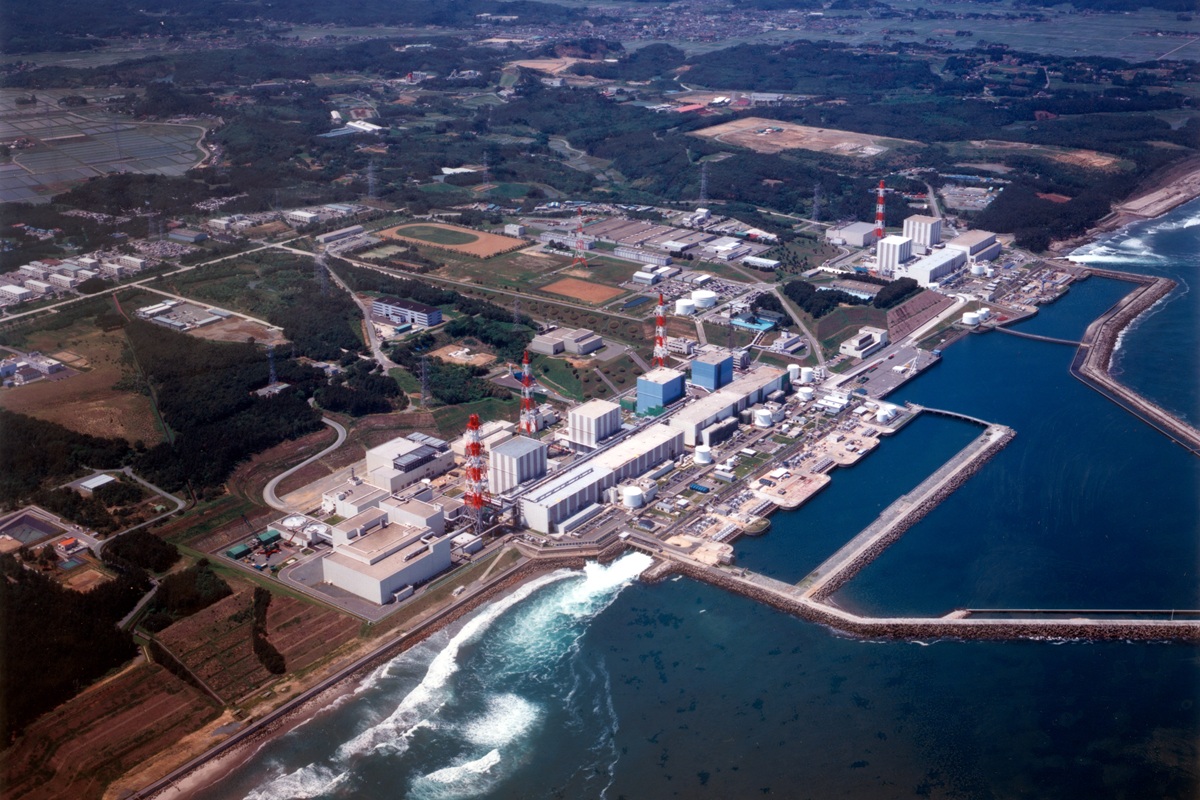 Aerial photo of the Fukushima Daiichi Nuclear Power Plant in 2007. (Image Credit: TEPCO)
Energy Security
Energy security has become one of the strongest arguments for restoring nuclear power. Japan’s energy self-sufficiency ratio was only about 15% in fiscal year 2023, according to the Agency for Natural Resources and Energy. The country consequently remains highly exposed to international prices for LNG, oil and coal, as well as disruptions to the maritime routes through which much of its fossil-fuel supply is imported.
The experience following Fukushima demonstrated the scale of that vulnerability. With nuclear plants offline, utilities turned increasingly to fossil fuels, increasing the country’s import requirements and exposing electricity consumers and industries to global fuel prices. Nuclear power would not make Japan energy independent because uranium, nuclear fuel and related services also depend on international supply chains. However, greater nuclear generation can reduce the amount of fossil fuel required for electricity production.
Geopolitical instability has added another dimension to the issue. Conflicts involving major energy-producing regions can affect oil and gas prices and create uncertainty around shipping routes. The government’s latest energy plan therefore emphasizes a balanced electricity mix, with greater use of renewable energy and nuclear power while avoiding excessive dependence on any single source or fuel.
The Agency for Natural Resources and Energy’s explanation of the Seventh Strategic Energy Plan also identifies growing electricity demand associated with digitalization and green transformation as an important consideration for Japan’s energy planning.
The 2040 Target
Japan’s nuclear target is ambitious because the country expects electricity demand to increase while seeking to reduce fossil-fuel generation. The government projects total electricity generation of approximately 1.1–1.2 trillion kWh in fiscal year 2040, compared with about 985.4 billion kWh in fiscal year 2023. Nuclear power is expected to supply around one-fifth of that generation under the government’s 2040 energy outlook.
Meeting the target will require more than restarting reactors that remain suspended. Many facilities in the existing fleet were built several decades ago, and some will eventually reach the end of their operating lives. Even reactors that receive approval to continue operating will require long-term maintenance and investment.
Japan therefore faces two related tasks: bringing eligible reactors back online and developing replacement capacity as older plants retire. The second task is more difficult because new nuclear projects require long planning periods, regulatory approval, major investment and cooperation from local communities.
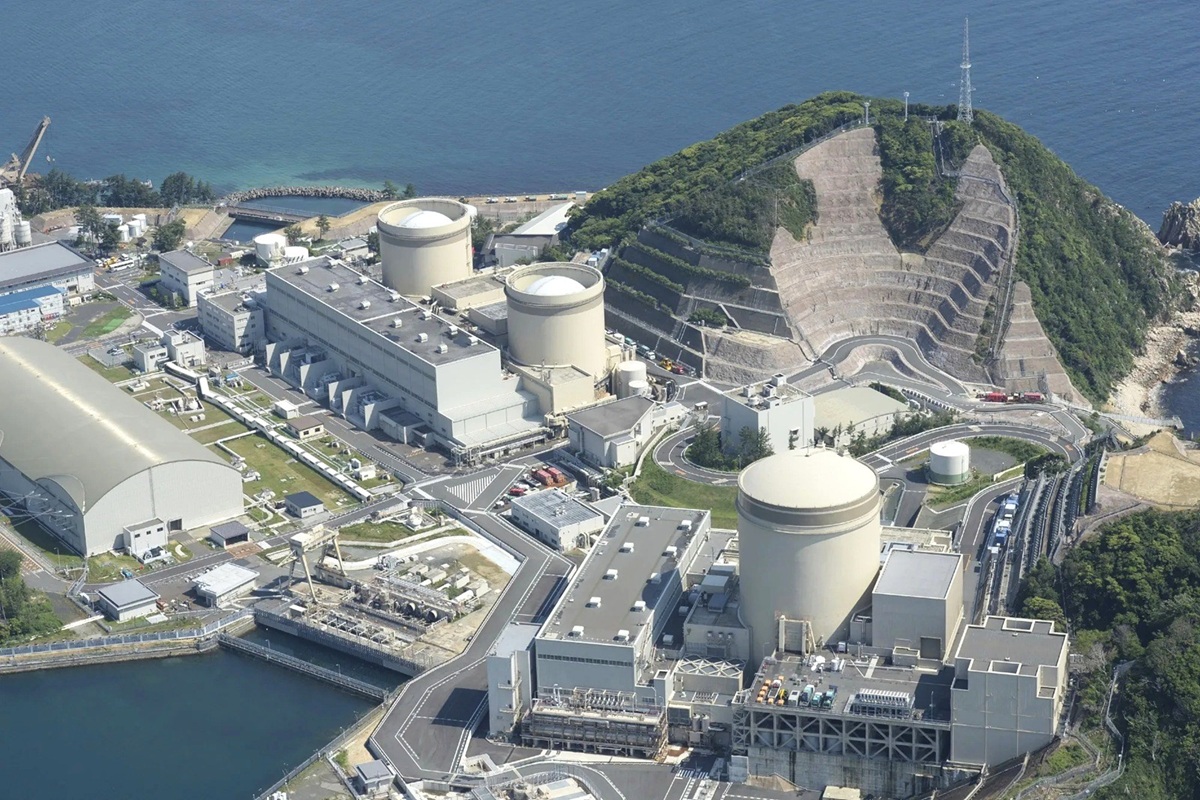 Kansai Electric Power’s Mihama nuclear power station in Mihama Town, Fukui prefecture, on May 23, 2021. (Image Credit: Naoki Ueda/Yomiuri Shimbun/via AP)
Regulatory and Fleet Challenges
Japan’s post-Fukushima safety regime remains one of the main reasons reactor restarts have proceeded slowly. The NRA’s new regulatory requirements strengthened standards for earthquakes and tsunamis and introduced requirements for severe-accident management, including measures to prevent core damage, protect containment structures and limit radioactive releases.
The regulator’s review process also covers construction plans and operational safety programs. The NRA’s description of the review and inspection process shows that operators must demonstrate compliance across several stages before and during operation.
Technical modifications, safety reviews and inspections can take years, particularly where plants require substantial upgrades. The regulatory system was created in response to weaknesses exposed by Fukushima, so any significant relaxation of safety requirements could undermine public confidence and generate political opposition.
At the same time, Japan must address the age of its nuclear fleet. Restarting existing reactors can restore capacity in the near term, but it does not solve the problem of eventual retirements. The government has consequently begun considering the rebuilding of existing nuclear facilities. Japan’s Ministry of Economy, Trade and Industry is considering rebuilding two to five reactors by the 2040s and as many as 11–14 by the 2050s, with the potential to add up to 16 GW of capacity.
The proposal marks a shift from simply restarting reactors shut down after Fukushima toward maintaining nuclear capacity over several decades. Japan’s utilities have welcomed the proposed replacement targets while seeking stronger policy support for investment in new nuclear infrastructure.
New construction would nevertheless face many of the same political and regulatory difficulties that have affected existing reactors. It would also require Japan to maintain a skilled nuclear workforce and industrial supply chain after years of limited new construction.
Waste Disposal and Public Acceptance
Radioactive-waste disposal remains one of the most difficult long-term issues surrounding Japan’s nuclear policy. The country has chosen deep geological disposal for high-level radioactive waste, with the Nuclear Waste Management Organization of Japan (NUMO) responsible for the site-selection process.
The process begins with a literature survey, followed by a preliminary investigation and then a detailed investigation before a final repository can be selected. Local participation is built into the process, and NUMO’s framework requires local views to be considered as the process advances.
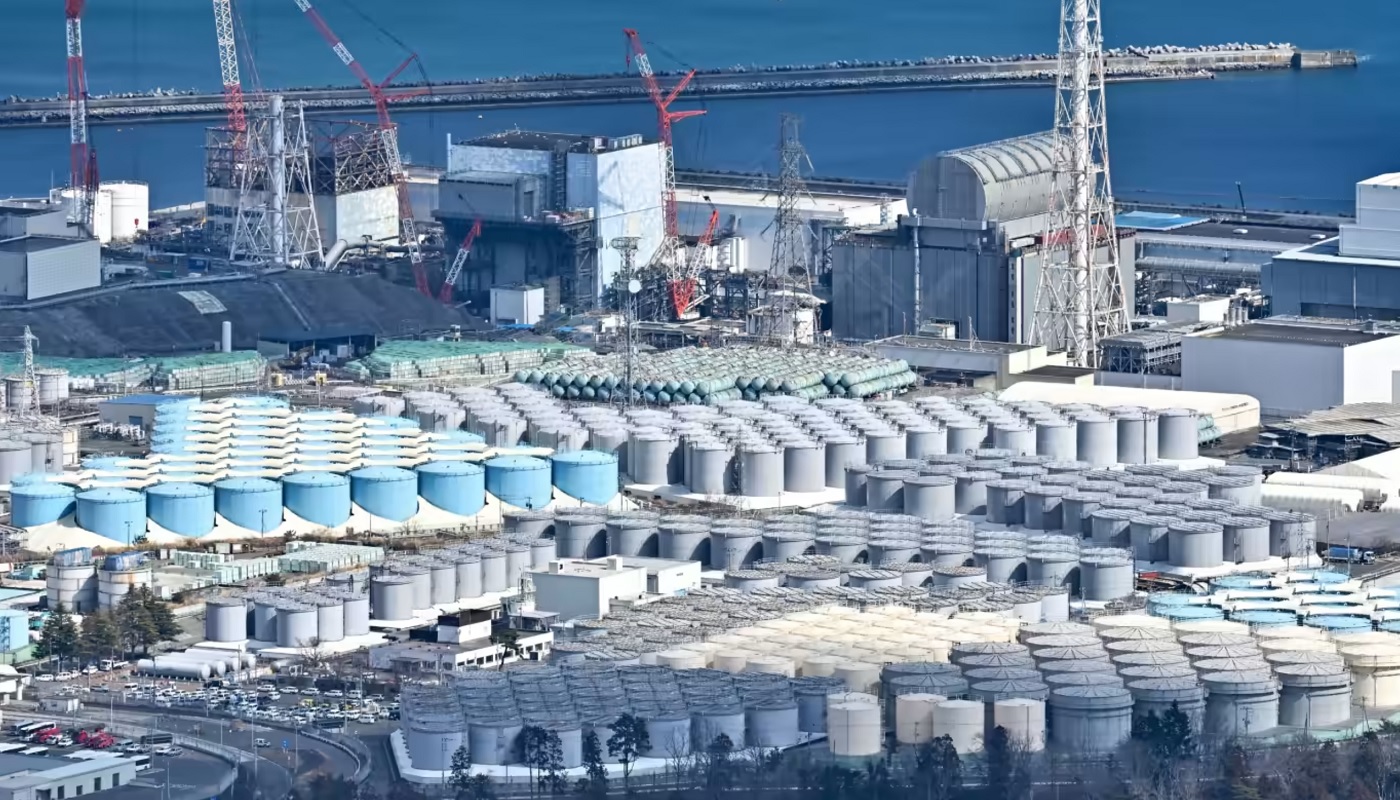 Water storage tanks at the Fukushima Daiichi nuclear power plant in Japan. (Image Credit: Mizuho Miyazaki/Nikkei Asia)
Japan made progress on the issue in May 2026 when NUMO began a literature survey on Minami-Torishima Island in Ogasawara Village, Tokyo. According to NUMO’s announcement, METI approved a change to NUMO’s FY2026 business plan on May 20, allowing the survey to begin the same day.
The survey does not amount to a decision to build a final repository on the island. It is the first stage of a much longer process involving the collection and assessment of geological and other relevant information, followed by further investigation and consultation. The development is nevertheless significant because Japan has struggled for years to identify communities willing to participate in the disposal process.
The issue is closely connected to public acceptance. The Fukushima accident left a lasting impact on attitudes toward nuclear safety, while local governments and host communities continue to play an important role in determining whether individual projects can move forward. Electricity generated by nuclear plants serves the wider economy, whereas host communities bear the immediate responsibilities and perceived risks associated with operating the facilities.
The NUMO site-selection process reflects this challenge by requiring engagement with local communities. Public acceptance will depend on confidence in safety measures, transparency and the handling of long-term risks. These concerns could become even more significant for new nuclear construction, where a community would be asked to host a facility expected to operate for decades.
Nuclear Generation and Advanced Reactors
Japan’s nuclear generation is recovering, although the scale of future growth remains uncertain. GlobalData’s nuclear-power market analysis forecasts Japanese nuclear generation at 101.0 TWh in 2025 and 123.3 TWh by 2035. The figures are a commercial market forecast rather than a Japanese government projection. Tokyo’s official objective is expressed primarily through the share of nuclear generation in the electricity mix, with nuclear power targeted at approximately 20% by fiscal year 2040 under the Seventh Strategic Energy Plan.
The final outcome will depend on reactor restarts, operating-life extensions, retirements, replacement projects and electricity demand. The current recovery therefore does not guarantee that Japan will reach its 2040 target.
Japan is also preparing for a longer-term role for advanced nuclear technologies. The government’s energy plan supports the development and deployment of next-generation reactors as part of efforts to maintain a stable, low-carbon electricity supply. The Agency for Natural Resources and Energy identifies advanced reactors among the technologies Japan intends to develop toward 2040.
Their contribution is unlikely to be substantial in the immediate future because new reactor designs still face regulatory, financing, construction and supply-chain challenges. Existing reactors are therefore likely to remain the main source of any near-term increase in nuclear generation, while advanced designs are more relevant to the longer-term replacement of Japan’s aging fleet.
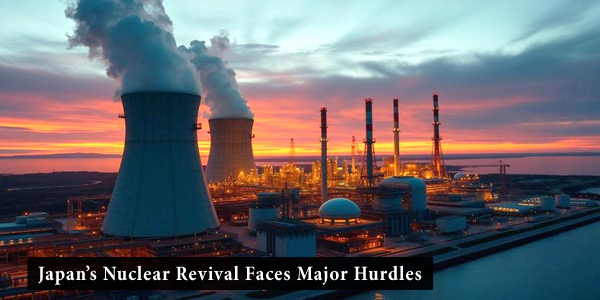
 Representational image showing large hyperbolic cooling towers with industrial buildings and structural frameworks at the base. (Image Credit: IRIA AI Generated Images)
Implications for East Asian Energy Security
Japan’s nuclear policy has implications beyond its domestic electricity system. The country is one of the world’s major energy importers, while East Asian economies more broadly remain heavily dependent on imported oil, gas and coal. Reducing Japan’s fossil-fuel requirements would strengthen the resilience of one of the region’s largest economies.
The change would not remove external dependencies. Japan would continue to rely on international uranium supplies, nuclear-fuel services and specialized equipment. Nuclear power should consequently be viewed as a means of diversifying Japan’s energy security rather than achieving complete energy independence.
A larger nuclear contribution would allow Tokyo to reduce some dependence on imported fossil fuels while maintaining a substantial source of dispatchable, low-carbon electricity. This could become increasingly important if electricity demand continues to rise because of data centers, industrial activity and broader digitalization.
Strategic Implications
Japan’s nuclear policy is moving beyond the immediate task of restarting reactors shut down after Fukushima. The government is seeking to preserve nuclear power as a long-term component of the electricity system while preparing for the retirement of older plants. Achieving that objective will require progress across several areas, including reactor restarts, long-term operation, replacement capacity, radioactive-waste disposal and public acceptance.
Some of this transition is already underway. The NRA records 11 operating reactors, while the government is considering the reconstruction of aging facilities. The launch of the Minami-Torishima literature survey also marks further progress in Japan’s long-delayed effort to identify a potential site for geological disposal of high-level radioactive waste.
The central challenge is translating this policy momentum into sufficient generating capacity to support the 2040 target. Restarting existing reactors can restore capacity more quickly than developing new plants, but the age of Japan’s nuclear fleet means that replacement capacity will eventually be required. New projects will involve substantial investment, lengthy development and regulatory processes, and sustained political and community support.
Energy security will remain a central driver of this policy. Limited domestic energy resources leave Japan exposed to international fuel prices and disruptions to maritime supply routes, while rising electricity demand could further increase that vulnerability. Greater nuclear generation would not eliminate these risks, but it would reduce reliance on imported fossil fuels and provide greater diversification within the country’s electricity mix.
Japan is therefore likely to continue rebuilding its nuclear sector, although the process will be gradual. Sustaining nuclear capacity over the next generation will depend on the successful restart of eligible reactors, replacement of aging facilities, continued adherence to stringent safety standards, broader public acceptance and tangible progress on radioactive-waste disposal. The direction of policy is increasingly clear, but the scale and durability of Japan’s nuclear revival will depend on whether these issues can be addressed together.
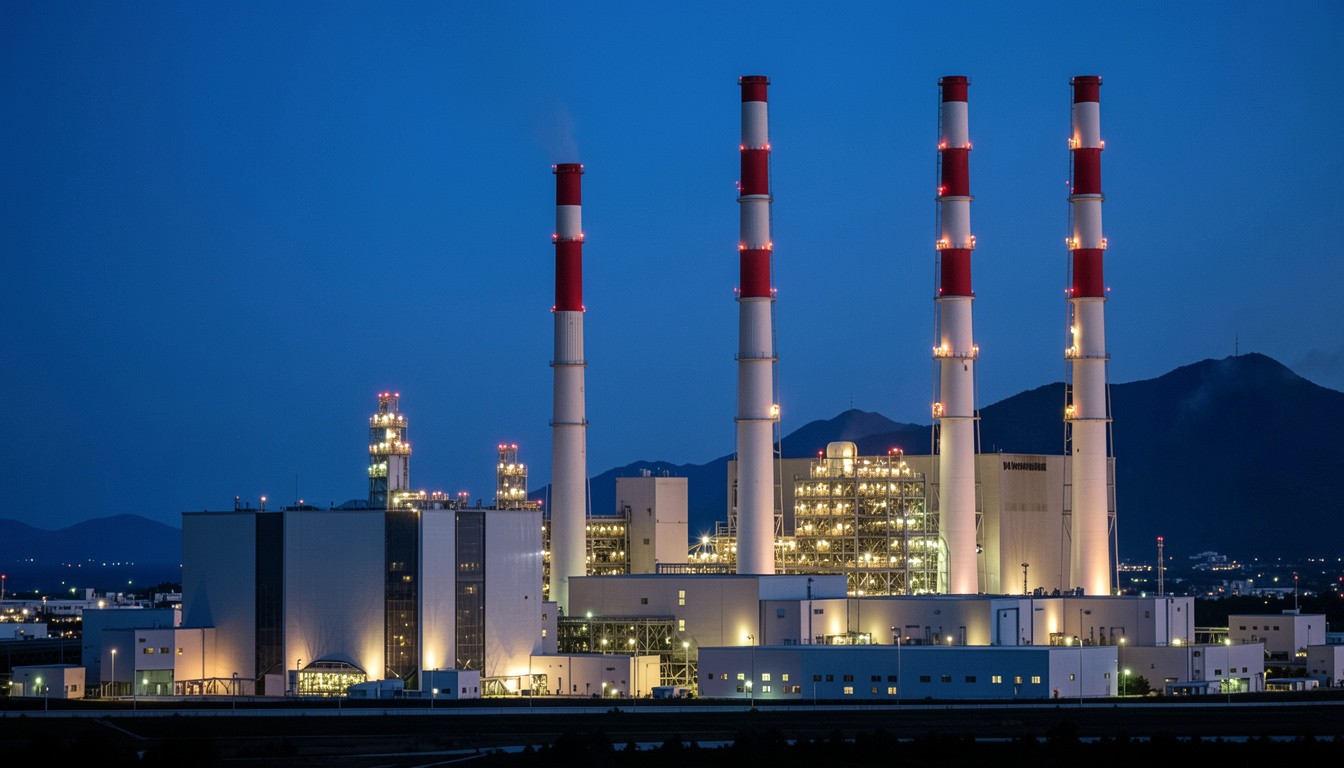 Representational image showing a large industrial thermal power station featuring tall, red-and-white banded exhaust stacks illuminated against a deep blue evening sky, with industrial buildings and structural frameworks at the base. (Image Credit: IRIA AI Generated Images)
ALSO READ:
 Russia's Undersea Strategy and the Changing Nature of Maritime Power
 Saudi Arabia, Pakistan and Turkiye’s Mecca Defense Agreement: A New Framework for Regional Security Cooperation
Regions




Issues