





Saudi Arabia, Pakistan and Turkiye’s Mecca Defense Agreement: A New Framework for Regional Security Cooperation
Syed Bahadur - August 19, 2026
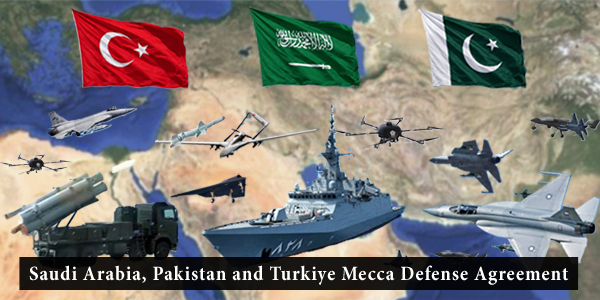
Saudi Arabia, Pakistan and Turkiye signed the Mecca Joint Defense Agreement on August 7, 2026. The agreement establishes a collective-defense framework under which an armed attack against any one of the three countries will be regarded as an attack against all.
The agreement was signed in Mecca by Saudi Crown Prince and Prime Minister Mohammed bin Salman, Turkish President Recep Tayyip Erdoğan and Pakistani Prime Minister Shehbaz Sharif. Pakistan’s Chief of Army Staff, Field Marshal Asim Munir, also participated in the high-level meetings surrounding the agreement.
The defense pact comes amid heightened security tensions across the Middle East, including the conflict involving Iran, attacks affecting regional infrastructure and continuing disruption to major maritime routes. These developments have increased pressure on Gulf states to strengthen their defensive capabilities and develop additional security partnerships.
The three governments have emphasized that the arrangement is defensive and is not directed against a particular country. Turkish and Pakistani officials have described the agreement as purely defensive and open to additional members, while also stressing that it does not replace their existing security commitments.
The agreement brings together three countries with established but different military relationships. Its significance therefore extends beyond the collective-defense provision, creating a framework for closer political and military coordination while connecting existing bilateral defense partnerships.
Collective Defense Framework
The central provision is the commitment to regard an armed attack against one member as an attack against all three. This establishes a collective-defense principle and gives Riyadh, Islamabad and Ankara a common political position on aggression against any of the participating states.
The agreement does not establish a NATO-style integrated military command or prescribe a single automatic military response following an attack. Each country retains control over its own armed forces, while the nature of any assistance would depend on the circumstances of a particular crisis.
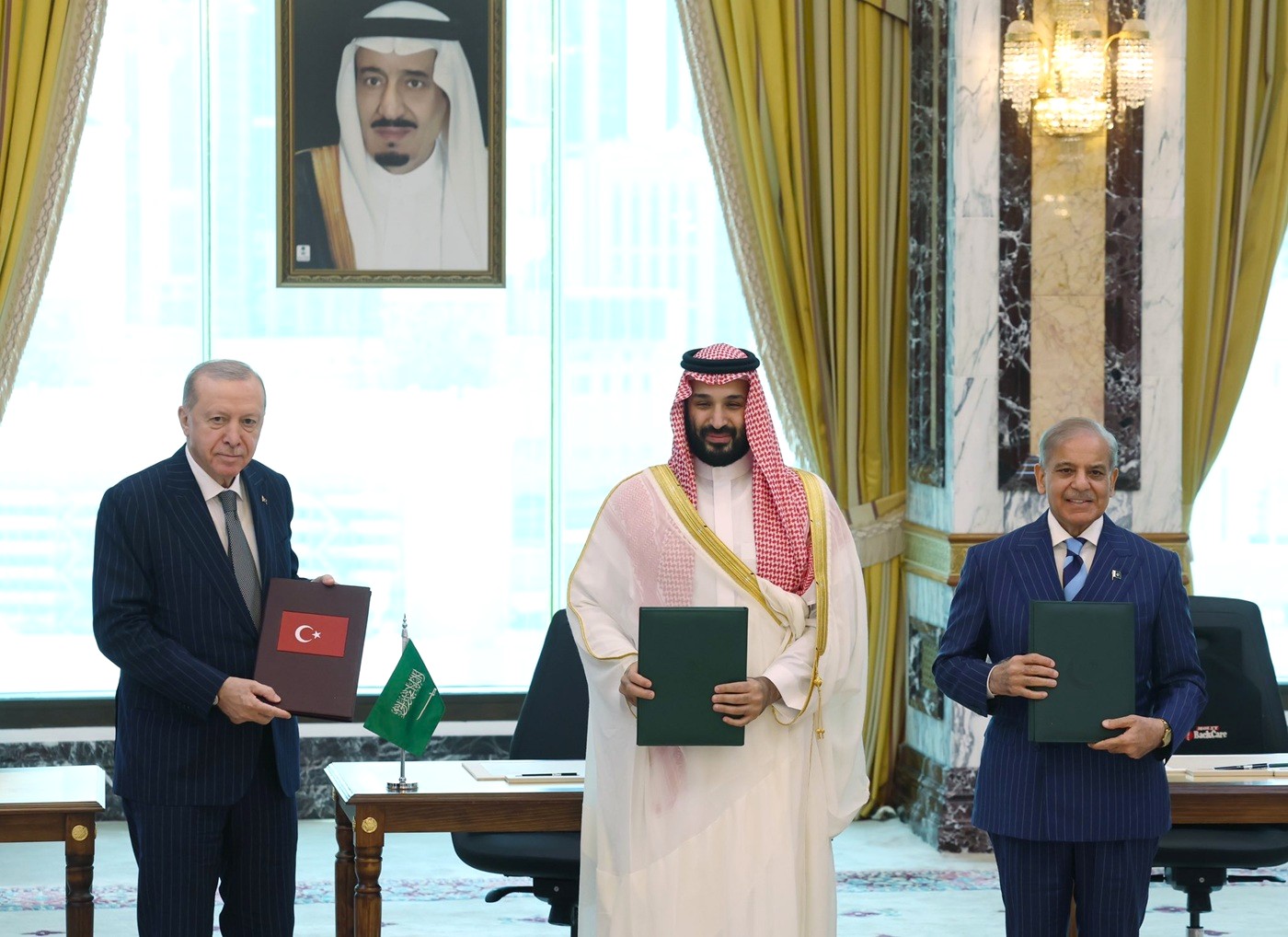 President of Türkiye Recep Tayyip Erdoğan, Saudi Arabia's Crown Prince and Prime Minister Mohammed bin Salman bin Abdulaziz Al Saud, and Prime Minister of Pakistan Muhammad Shehbaz Sharif signed the Makkah Joint Defence Agreement, in Makkah, on August 7, 2026. (Image Credit: Presidency of the Republic of Türkiye/X/@trpresidency)
The pact creates a political commitment without establishing a permanent multinational military force. Saudi Arabia, Pakistan and Turkiye can continue to maintain their existing bilateral and multilateral defense relationships while using the new framework for additional coordination.
The three governments are also moving toward more structured political and military consultations. The planned mechanisms will involve defense and foreign-policy officials as well as senior military commanders, creating a formal channel for coordinating security policies.
Subsequent discussions have also identified areas such as unmanned systems, electronic warfare and artificial intelligence as potential fields for cooperation. These could provide opportunities for expanded trilateral defense cooperation as the three governments develop the mechanisms established by the agreement.
Existing Defense Ties
The Mecca agreement builds on a longstanding Saudi-Pakistani military relationship. The two countries have maintained defense cooperation involving military training, personnel exchanges and security contacts for decades, giving their relationship a substantial institutional foundation.
Their relationship gained a formal collective-defense dimension through the Strategic Mutual Defense Agreement signed in 2025. The agreement established a principle under which aggression against either Saudi Arabia or Pakistan would be regarded as aggression against both, creating an important bilateral foundation for the later trilateral arrangement.
Pakistan’s defense relationship with Saudi Arabia has also involved military personnel, training and regular institutional contacts between their armed forces. These longstanding ties give Islamabad an established role in Saudi security affairs and provide an existing military basis for the new framework.
Turkiye has developed substantial defense relations with both Saudi Arabia and Pakistan. Ankara and Islamabad have expanded cooperation in naval programs, military aviation, training and defense production, while Saudi Arabia has become an increasingly important customer for Turkish defense systems.
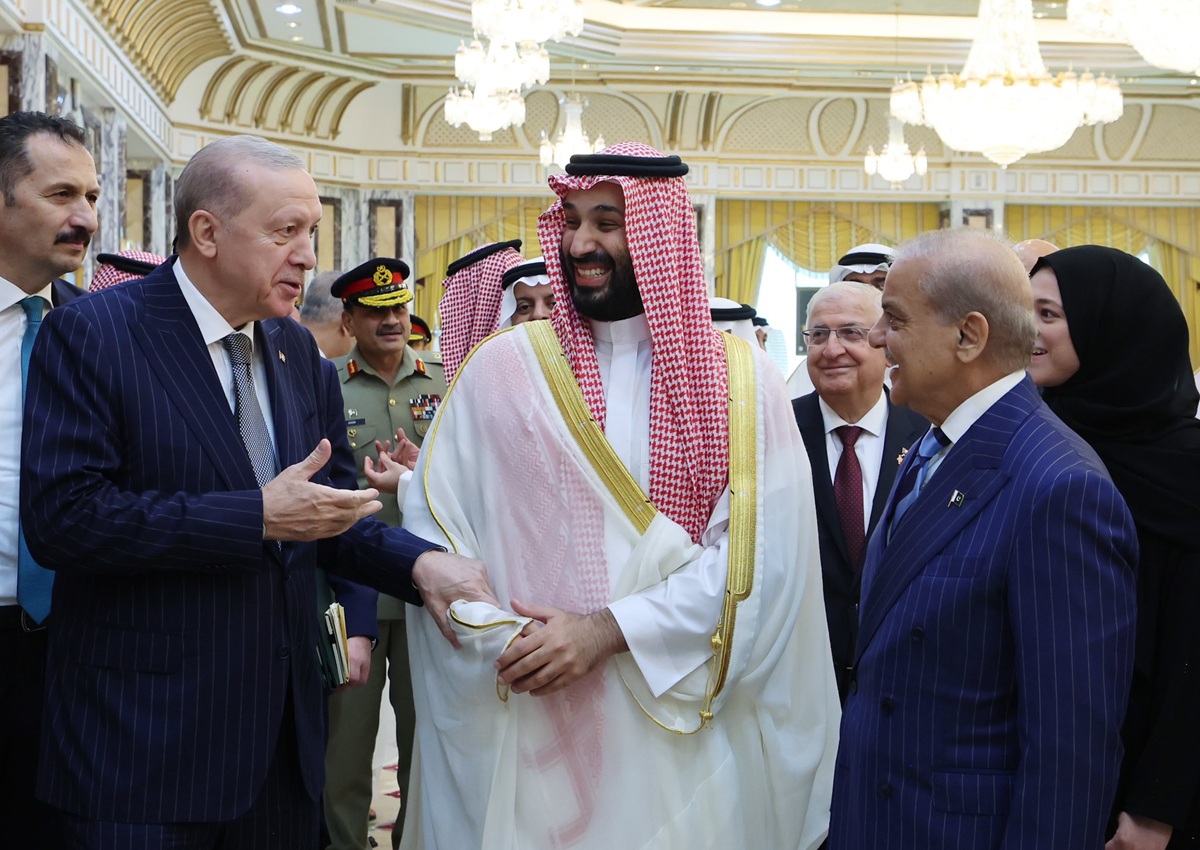 President of Türkiye Recep Tayyip Erdoğan, Saudi Arabia's Crown Prince and Prime Minister Mohammed bin Salman bin Abdulaziz Al Saud, and Prime Minister of Pakistan Muhammad Shehbaz Sharif meeting in Makkah, on August 7, 2026. (Image Credit: Presidency of the Republic of Türkiye/X/@trpresidency)
The three countries therefore entered the Mecca agreement with several established bilateral relationships already in place. The new framework connects those relationships and gives them an additional political structure through which defense cooperation can be expanded.
Maritime Security
Saudi Arabia’s defense cooperation with Pakistan and Turkiye is also developing through maritime security. Riyadh has established a multinational initiative focused on protecting shipping and strategic waterways in the Red Sea, Bab El-Mandeb Strait, and Gulf of Aden.
The Saudi-led Red Sea maritime defense initiative has a considerably broader membership than the Mecca agreement. Its participants are working on arrangements involving maritime security, intelligence sharing, operational planning, military capability development and joint naval activities.
Pakistan is expected to hold a senior position in the coalition’s command structure, while Turkiye has participated in meetings concerning freedom of navigation through the Bab El-Mandeb. The involvement of both countries gives them additional defense responsibilities alongside their bilateral relationship with Saudi Arabia.
The maritime initiative is separate from the Mecca agreement, but the overlap is strategically significant. Saudi Arabia, Pakistan and Turkiye are involved in both arrangements, creating another channel through which their military institutions can cooperate.
The Red Sea, Bab El-Mandeb and Gulf of Aden connect major commercial routes between Asia, the Middle East and Europe. Continued attacks on shipping and wider regional instability have consequently increased the importance of maritime surveillance, intelligence sharing and coordinated naval activity.
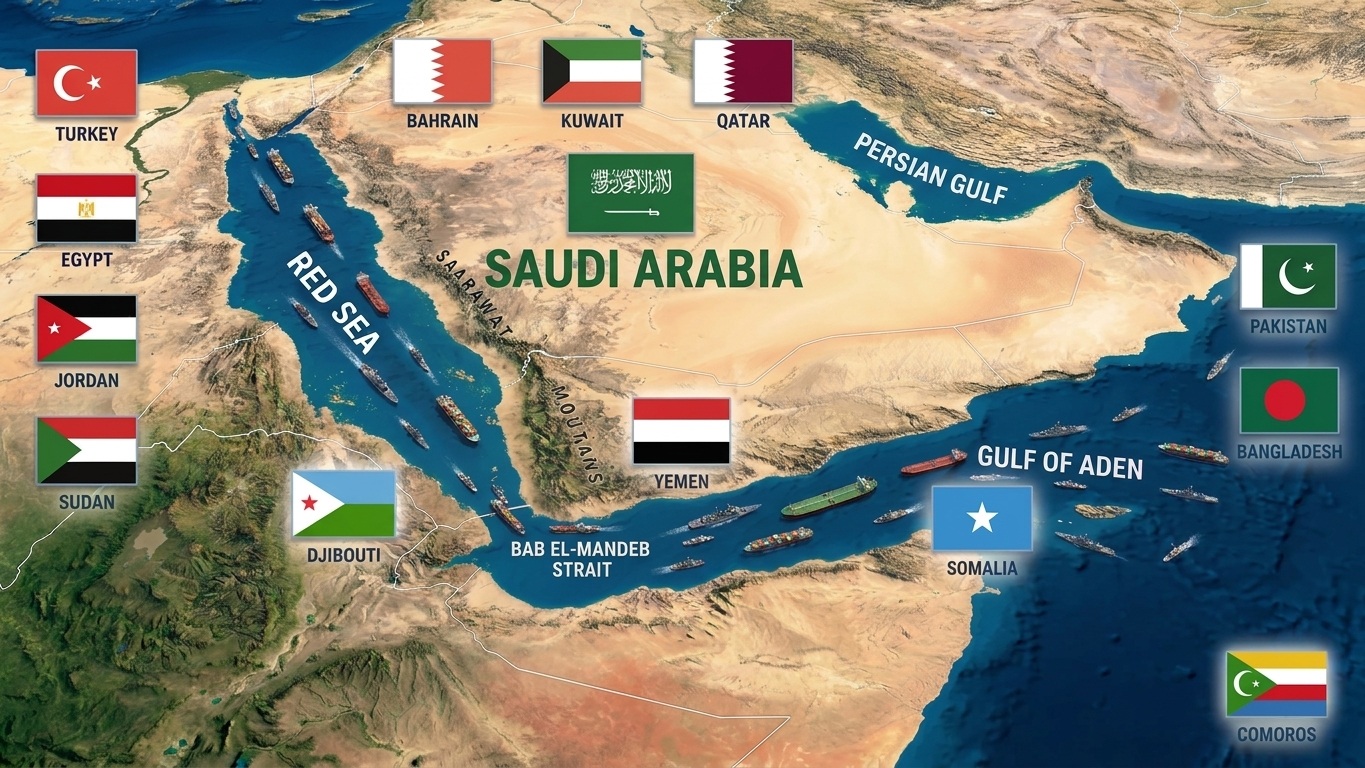 Saudi Arabia and 13 other countries have confirmed the creation of a maritime military coalition to safeguard freedom of navigation through the Bab al-Mandeb Strait, the Red Sea and the Gulf of Aden. (Image Credit: IRIA AI Generated Images)
Complementary Capabilities
The three countries bring different military and strategic resources to the framework. Saudi Arabia has substantial financial resources, a strategically important position in the Gulf and significant investment in military modernization.
Riyadh is also seeking to expand domestic defense production and reduce dependence on foreign suppliers. This gives Saudi Arabia an important industrial and financial role alongside its geographical position and military resources.
Turkiye contributes substantial conventional military capabilities and a growing domestic defense industry. The country has developed indigenous programs covering advanced air and naval platforms, including the KAAN fighter and MİLDEN submarine programs.
The expanding Turkish defense-industrial base provides capabilities that can complement Saudi Arabia’s financial resources and Pakistan’s military experience. Its growing production of indigenous systems has also made defense exports an increasingly important part of Ankara’s international security relationships.
Pakistan contributes a large and experienced military, an established defense industry and longstanding security cooperation with Saudi Arabia. Its nuclear capability gives it a strategic dimension that differs from those of the other two members.
Taken together, the three countries offer a combination of financial resources, strategic geography, military experience and defense-industrial capacity. These differences give the framework a broader range of capabilities than any of the three countries could provide individually.
Regional Security
The agreement comes at a time when security concerns have increased across the Middle East. Missile and drone attacks, threats to energy infrastructure and attacks affecting commercial shipping have placed greater attention on the protection of critical facilities and strategic routes.
The Strait of Hormuz remains particularly important because prolonged disruption can affect energy markets and international shipping far beyond the Gulf. The Red Sea and Bab El-Mandeb face similar concerns, with disruptions capable of affecting commercial routes connecting Asia, the Middle East and Europe.
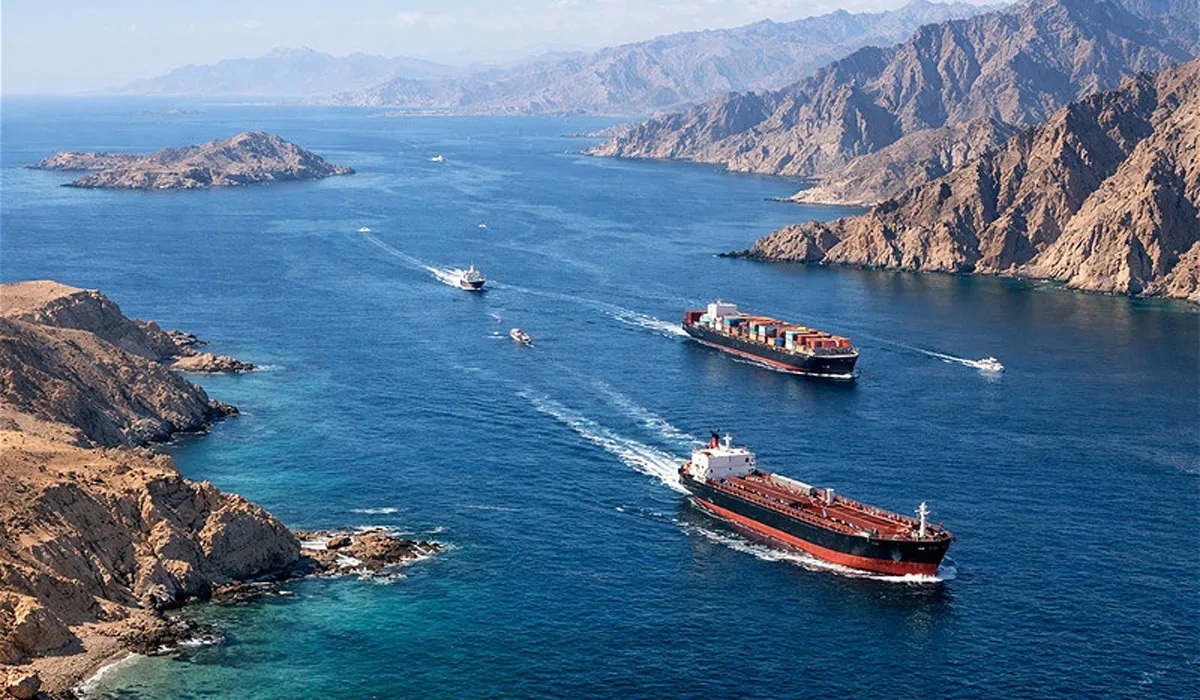 Commercial cargo and oil tanker vessels navigating the narrow, rocky passage of the Strait of Hormuz. (Image Credit: Logos Press)
Saudi Arabia therefore faces interconnected security challenges extending from Gulf waters and energy infrastructure to the Red Sea and Yemen. Riyadh’s decision to strengthen both the Mecca framework and the broader maritime coalition reflects the geographical spread of these concerns.
Turkiye has combined its security engagement with diplomatic activity during the regional crisis, while Pakistan has maintained close defense and political coordination with Saudi Arabia. Their involvement gives Riyadh additional regional partners without requiring it to abandon its existing international security relationships.
The broader regional environment has also encouraged governments to develop overlapping security arrangements rather than relying exclusively on one external provider. The Mecca agreement fits within this wider movement toward greater regional coordination and diversification of defense partnerships.
Egypt’s Possible Participation
Egypt could become an important addition to the Mecca agreement. Erdoğan has said that Cairo could join the pact, while Egyptian Foreign Minister Badr Abdelatty has said that Egypt is seriously examining the possibility.
The possible participation of Egypt would give the framework a wider regional dimension. Cairo already maintains close political and security relations with Saudi Arabia, Pakistan and Turkiye, providing an existing basis for deeper cooperation.
Egypt also possesses significant military capabilities and occupies a strategically important geographical position. Its location connects the Mediterranean, Red Sea and North African security environments, while the Suez Canal gives Cairo an important role in international maritime trade.
Egypt is also involved in the wider Saudi-led maritime security initiative. Participation in both arrangements could create an additional connection between the Mecca framework and broader efforts to protect the Red Sea and surrounding waterways.
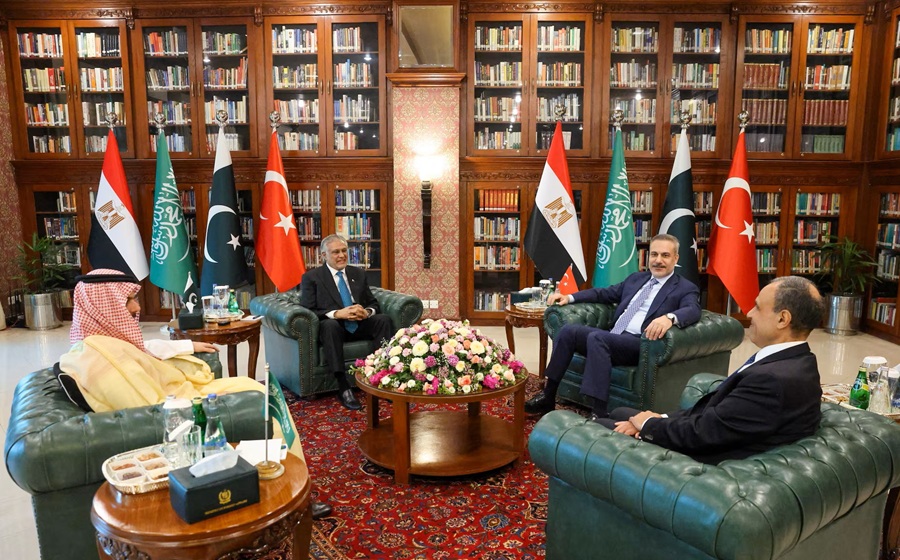 Egyptian Foreign Minister Badr Abdelatty, Turkish Foreign Minister Hakan Fidan, Saudi Foreign Minister Faisal bin Farhan Al Saud and Pakistani Foreign Minister Mohammad Ishaq Dar meet to discuss regional de-escalation, amid the U.S.-Israel conflict with Iran, in Islamabad, Pakistan, March 29, 2026. (Image Credit: Turkish Foreign Ministry)
The four countries have already developed a separate channel for political consultation. Their June 2026 foreign ministers’ meeting reaffirmed their intention to coordinate on regional security and stability, giving the proposed expansion of the Mecca framework a broader diplomatic context.
Cairo has not formally joined the Mecca agreement, however. Any decision to participate would require separate political and legal consideration in Egypt.
Defense Cooperation
The agreement provides a basis for connecting the different capabilities of the three members through military training, joint exercises, intelligence exchanges, defense planning and cooperation between defense industries.
The three governments have discussed broader political and military coordination across land, sea and air operations. Advanced areas such as unmanned systems, electronic warfare and artificial intelligence could become part of future cooperation as the framework develops.
Joint exercises could help the three armed forces become more familiar with each other’s procedures, communications systems and operational practices. Regular training would also provide opportunities to identify differences in equipment and doctrine that could affect cooperation during a crisis.
Intelligence cooperation offers another area for development. Greater information sharing could improve the three countries’ ability to monitor missile, drone, maritime and other security threats, particularly across areas where their strategic interests overlap.
Defense-industrial cooperation could become important over the longer term. Saudi Arabia is seeking greater domestic production, Turkiye has developed a growing indigenous defense industry, and Pakistan has extensive experience in military manufacturing and maintenance.
The three countries could therefore pursue cooperation involving procurement, technology transfer, joint research or production. Such projects would require separate agreements and detailed negotiations and are not automatically established by the Mecca pact.
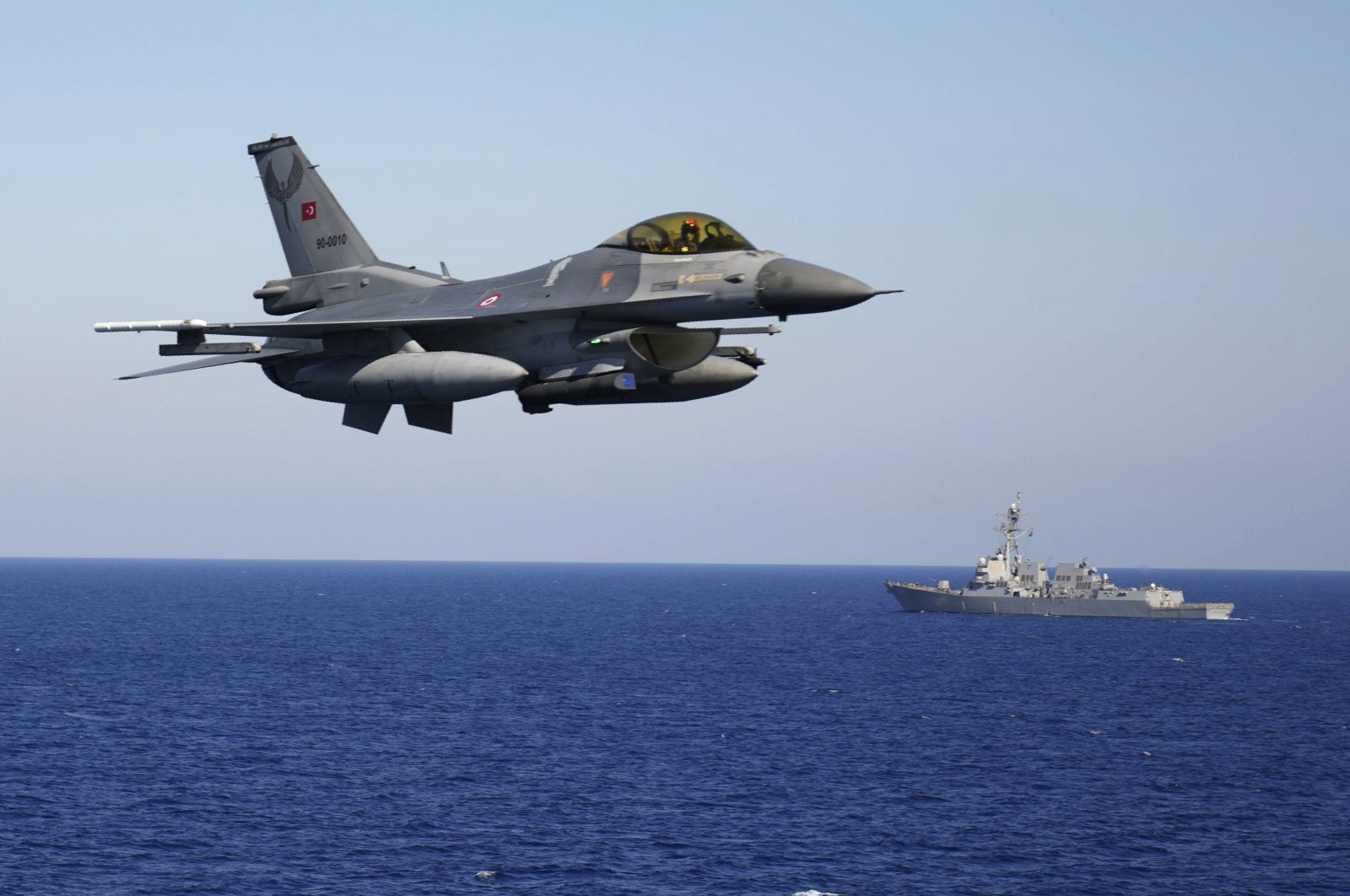 A Turkish F-16 fighter flies over naval ships during an naval exercise on Türkiye's western coast on the Mediterranean Sea, on September 15, 2022. (Image Credit: AP/via X/@Defence_Turk)
Strategic Implications
The Mecca agreement gives Saudi Arabia another layer of defense cooperation at a time when Riyadh is diversifying its relationships with regional and external powers. It does not replace Saudi Arabia’s existing security partnerships, particularly with the United States, but provides another mechanism for cooperation with two major regional military powers.
The arrangement also fits within a wider regional effort to develop security mechanisms among countries that share concerns over instability, maritime disruption and the reliability of existing security arrangements. The emerging security framework involving Egypt, Pakistan, Saudi Arabia and Turkiye provides a broader political context for the trilateral agreement, although the four countries have not established a formal alliance as a group.
The four countries have already developed a separate channel for political consultation. Their June 2026 foreign ministers’ meeting reaffirmed their intention to coordinate on regional security and stability, giving the proposed expansion of the Mecca framework a broader diplomatic context.
For Pakistan, the pact adds a formal multilateral dimension to its longstanding security relationship with Saudi Arabia while strengthening its strategic engagement with Turkiye. Islamabad can use the framework to maintain a prominent security role in the Gulf while continuing to manage its wider relationships with major external powers.
For Turkiye, the agreement adds a political-security dimension to defense relationships that have already expanded through bilateral military and industrial cooperation with both Saudi Arabia and Pakistan. It also provides Ankara with another mechanism for combining defense engagement with its broader diplomatic role in the region.
The possible participation of Egypt could broaden the framework considerably. Cairo would add another major Arab military power and extend the arrangement geographically toward North Africa, the eastern Mediterranean and the Red Sea.
The maritime coalition provides another point of overlap between the security interests of the three countries, but it remains a separate initiative from the Mecca agreement. Its focus is maritime security, while the Mecca pact establishes a broader collective-defense commitment.
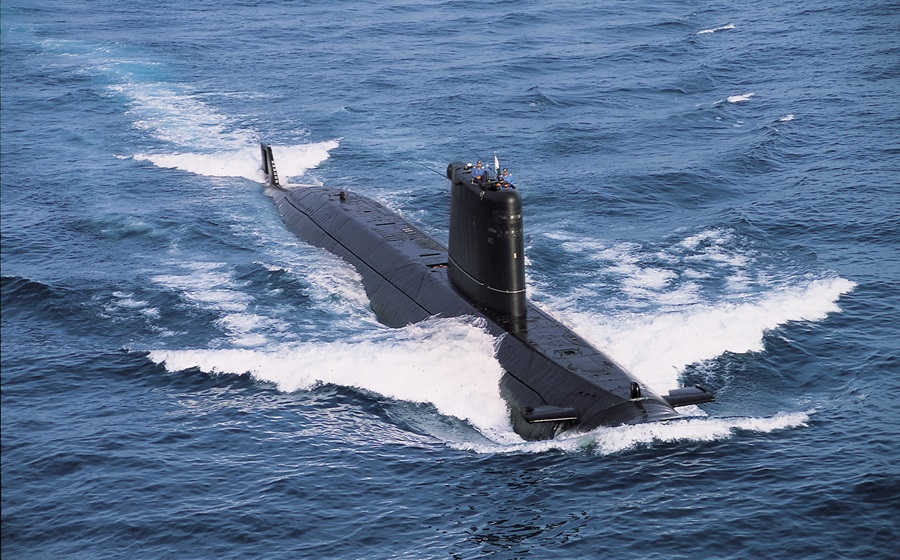 Turkish firm STM delivered the upgraded second Agosta 90B Class submarine PNS/M HAMZA (S-139) to the Pakistan Navy in 2023. (Image Credit: STM)
The agreement should not be treated as a NATO-style alliance. It has no integrated command structure and does not establish a single automatic military response to an attack. Its significance instead rests on the political commitment among the three governments and their decision to place existing defense relationships within a common framework.
The effectiveness of the arrangement will depend on how consistently the three governments maintain political consultations, military exercises, intelligence cooperation and defense-industrial engagement. Differences in military systems, strategic priorities and foreign-policy positions could limit the depth of cooperation even as the political relationship develops.
Taken together, these arrangements point to a more diversified regional security environment in which Saudi Arabia, Pakistan and Turkiye are building additional mechanisms alongside their existing international partnerships. The Mecca agreement gives their established defense relationships a collective-defense dimension, while the maritime initiative addresses a different but closely connected security requirement.
The possible addition of Egypt would further broaden this emerging framework and increase its geographical and political reach. Whether the Mecca agreement develops into a more substantial regional security mechanism will depend on the extent to which the three members, and potentially additional participants, translate their political commitment into sustained military and institutional cooperation.
ALSO READ:
 Europe’s Drone Ambitions Face an ITAR Challenge
 Russia's Undersea Strategy and the Changing Nature of Maritime Power
Regions




Issues