








Highlights of Eurosatory 2026
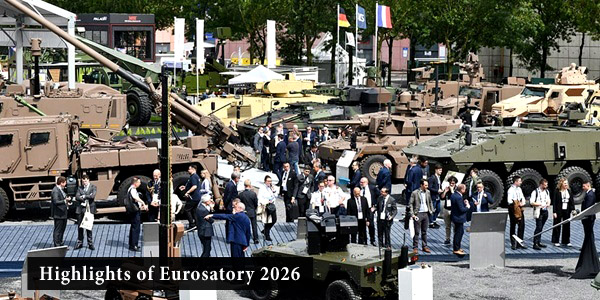
Eurosatory 2026, held from June 15-19 at the Paris Nord Villepinte Exhibition Centre, marked the largest edition in the history of the world's leading land and air-land defense exhibition.
More than 2,300 exhibitors from 66 countries, 42 national pavilions, and over 330 official delegations representing 93 countries, the event became a major showcase of how governments and defense industries are adapting to a rapidly changing security environment.
This year's exhibition highlighted a clear shift in global defense priorities. The lessons of the war in Ukraine dominated discussions, demonstrations, and procurement plans. Drones, loitering munitions, electronic warfare systems, counter-drone technologies, air defense networks, and long-range strike capabilities emerged as the most sought-after capabilities on display.
While Eurosatory has traditionally served as a venue for showcasing armored vehicles, artillery systems, and conventional land warfare equipment, the 2026 edition demonstrated how modern conflicts are reshaping military thinking. The exhibition reflected a growing consensus among NATO members and partners that future wars will require integrated multi-domain operations combining land, air, cyber, space, and unmanned systems.
Ukraine Becomes the Central Focus
One of the most significant theme throughout Eurosatory 2026 was Ukraine's growing role within the European defense ecosystem. The Ukrainian defense industry arrived in Paris with its largest-ever presence at the exhibition.
Dozens of Ukrainian companies showcased combat-proven technologies developed and refined during more than four years of large-scale war against Russia. These included drones, loitering munitions, guided bombs, electronic warfare systems, reconnaissance platforms, and air defense technologies.
Unlike previous defense exhibitions where Ukraine was largely viewed as a customer seeking military assistance, Ukrainian firms appeared increasingly as partners offering battlefield-tested expertise.Ukraine's Fire Point booth at Eurosatory 2026 in Paris is displaying footage of today's FP-1 and FP-2 drone strikes on Russia's Moscow refinery. pic.twitter.com/93IqSqcjXQ
— DD Geopolitics (@DD_Geopolitics) June 18, 2026
Many European defense companies viewed Ukraine as a valuable source of operational experience and innovation, particularly in areas such as drone warfare, electronic warfare, and long-range strike systems. This growing integration was reflected in one of the most important announcements of the exhibition.
Launch of Neptune-2 Cooperation
One of the most strategically significant agreements signed during Eurosatory was a memorandum of understanding between European missile manufacturer MBDA and Ukraine's Luch Design Bureau.
The agreement focuses on the development of the next-generation Neptune-2 cruise missile, an evolution of the Neptune missile family that gained international attention after Ukrainian forces used the original system to sink the Russian cruiser Moskva in 2022.
According to both sides, the partnership aims to combine Ukrainian combat experience and missile design expertise with MBDA's advanced missile technologies and industrial capabilities. The objective is to develop enhanced deep-strike capabilities for Ukraine while expanding strategic defense cooperation between Ukraine and European industry.
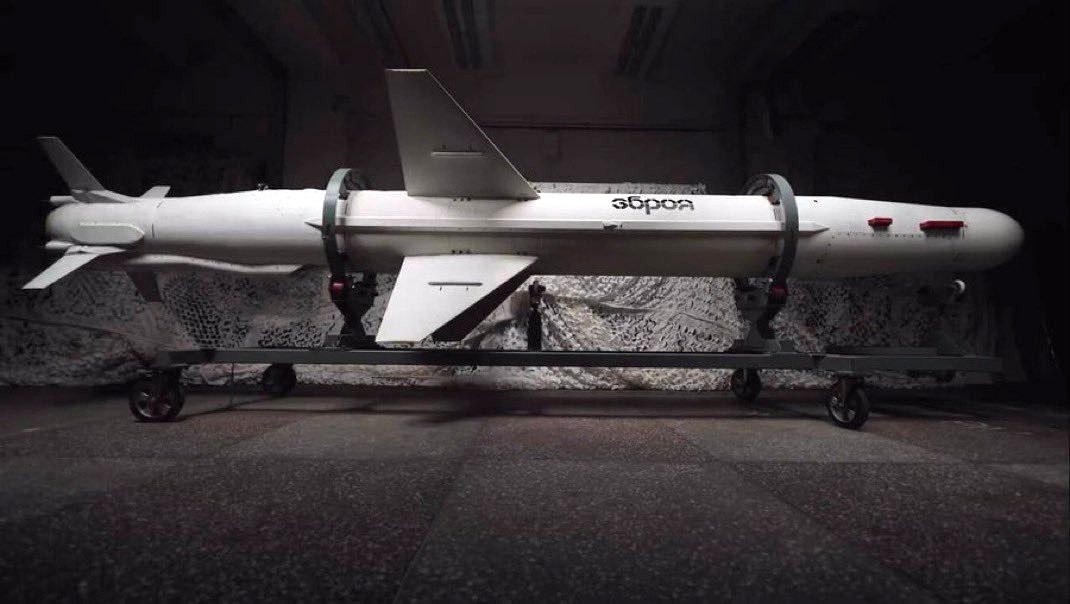 The “Long” Neptune cruise missile. (Image Credit: Visegrád 24/via X)
The agreement carries significance beyond the missile itself. It symbolizes a broader trend in which Ukrainian defense firms are increasingly being integrated into European defense supply chains. Rather than simply supplying weapons to Ukraine, European companies are now seeking long-term industrial partnerships that could shape future defense programs.
The Neptune-2 initiative also highlights the growing importance of long-range precision strike capabilities. European governments increasingly view deep-strike systems as essential deterrence tools amid concerns about future conflicts on the continent.
Counter-Drone Cooperation
Another major development came through a multinational initiative led by the United States. On June 16, the U.S. Army and several NATO allies and partner nations signed a Letter of Intent focused on expanding cooperation in counter-unmanned aircraft systems (Counter-UAS). The initiative seeks to improve interoperability, accelerate acquisitions, share battlefield lessons, and expand participation in the Uncrewed Aircraft System Marketplace.
The agreement reflects growing concern among military planners regarding the rapidly expanding drone threat. The war in Ukraine has demonstrated how relatively inexpensive drones can challenge expensive military platforms, disrupt logistics, conduct reconnaissance, and carry out precision attacks.
Military officials attending Eurosatory repeatedly emphasized that future armed forces must be capable of detecting, tracking, and defeating large numbers of unmanned systems operating simultaneously.
Counter-drone technologies became one of the most crowded sectors of the exhibition, with companies displaying radar systems, electronic warfare solutions, directed-energy concepts, interceptor drones, and integrated air defense networks designed specifically to address emerging threats.
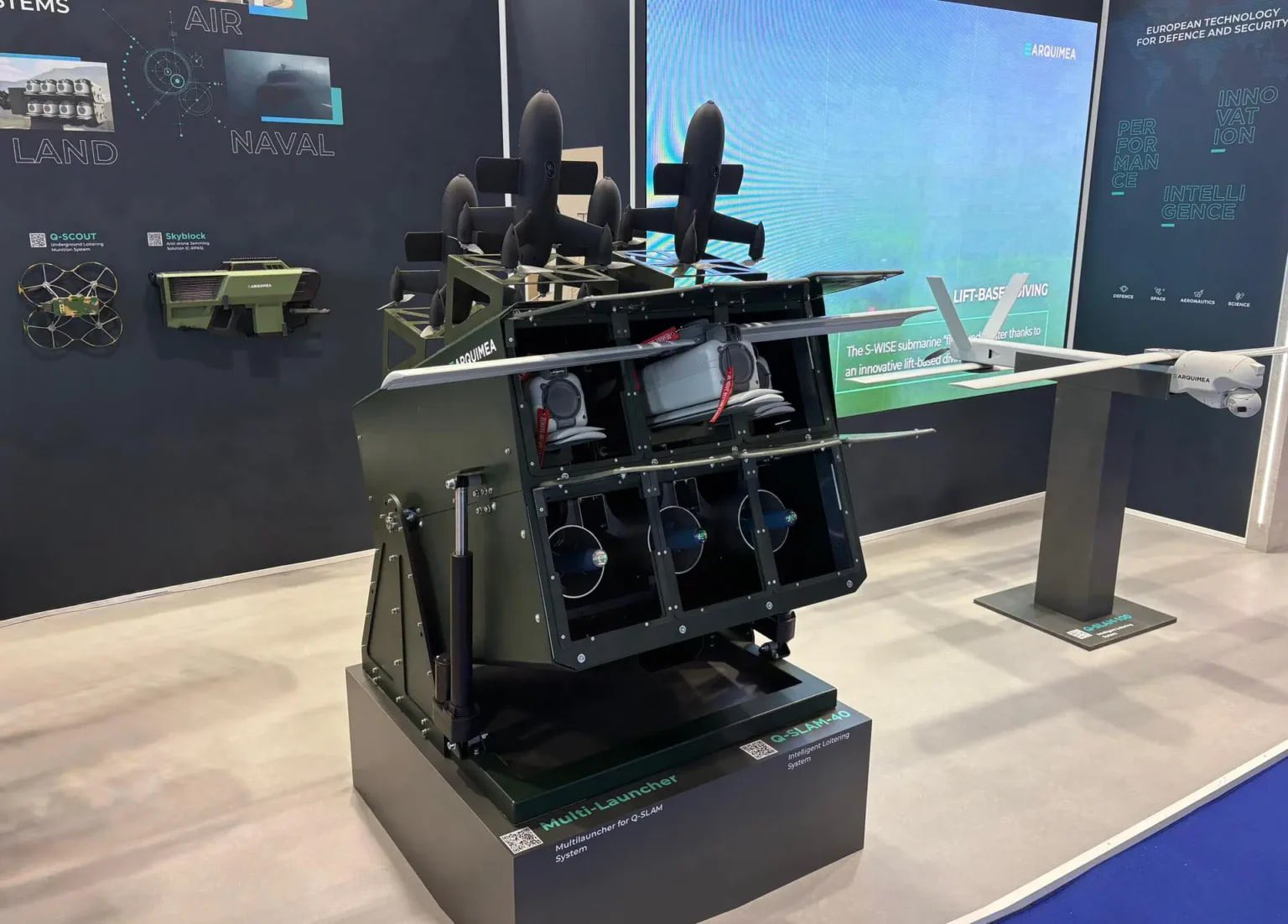 Spanish defense technology company ARQUIMEA unveils a layered counter-UAS system at Eurosatory 2026. (Image Credit: X/Drone_Wars_)
Loitering Munitions Become a Strategic Priority
The popularity of loitering munitions was another defining characteristic of Eurosatory 2026. Defense companies across Europe, the Middle East, and North America unveiled new systems designed to meet growing demand for low-cost precision strike capabilities.
Industry analysts estimate that the global market for loitering munitions could exceed $13 billion in the coming years, driven largely by lessons learned from Ukraine and other recent conflicts.
One notable announcement involved MBDA and UAE-based Fly-R, which agreed to cooperate on the development, qualification, and production of diamond-shaped loitering munitions for the United Arab Emirates Navy.
The agreement illustrates how governments are increasingly investing in autonomous and semi-autonomous strike systems capable of conducting reconnaissance and attack missions while reducing risks to personnel.
Many exhibitors promoted loitering munitions as a cost-effective alternative to traditional missile systems, particularly for targeting high-value assets and supporting distributed military operations.
European Rearmament Accelerates
Beyond individual weapons systems, Eurosatory 2026 reflected the broader trend of European rearmament. The war in Ukraine, concerns regarding long-term security guarantees, and growing geopolitical tensions have encouraged European governments to significantly increase defense spending. As a result, defense manufacturers are expanding production capacity and pursuing new industrial partnerships.
Several agreements announced during the exhibition focused on strengthening Europe's defense industrial base rather than delivering immediate procurement contracts.
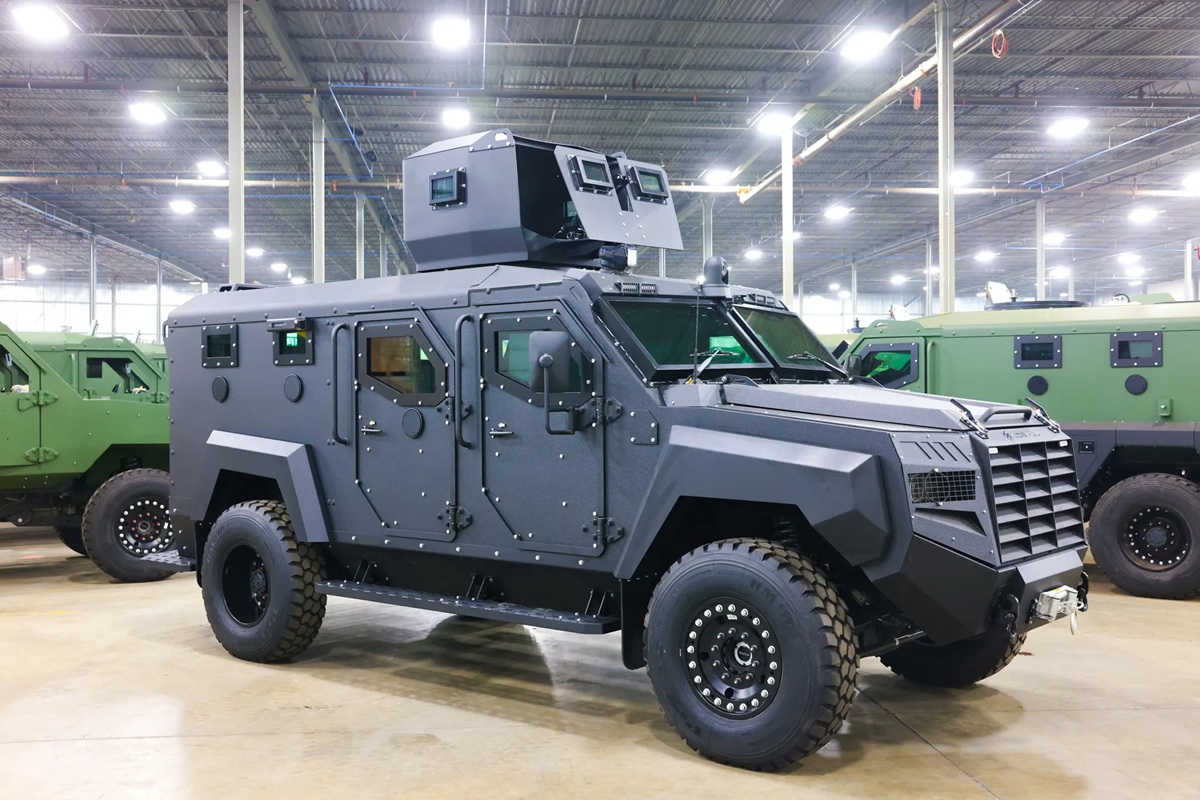 Roshel's Senator Armored Personnel Carrier on display. (Image Credit: Roshel)
Among them was a strategic partnership between Daimler Truck and Canadian armored vehicle manufacturer Roshel. The two companies agreed to cooperate on the development, production, and support of protected vehicles for defense and security customers.
Similarly, Czech defense giant CSG Group signed an agreement with Ukrainian Armor LLC to cooperate on advanced engine solutions for missile and unmanned systems, reflecting the increasing industrial integration between European and Ukrainian defense sectors.
Another notable agreement involved Thales and Poland's Mesko, which signed a memorandum of understanding to strengthen cooperation on 70mm rocket systems and related industrial capabilities. These partnerships illustrate a growing emphasis on production resilience, supply-chain security, and localized manufacturing.
Air Defense Remains a Top Priority
Air defense emerged as one of the most prominent themes throughout the exhibition. The widespread use of drones, ballistic missiles, cruise missiles, and increasingly sophisticated aerial threats has prompted governments to reassess traditional air defense concepts.
MBDA used Eurosatory to highlight its vision for a layered air defense architecture capable of defending against everything from small drones to advanced ballistic and hypersonic missiles. The company emphasized integrated systems capable of responding to multiple simultaneous threats across different domains.
The emphasis on air defense was particularly evident among European nations seeking to address vulnerabilities exposed by the Ukraine conflict. Officials repeatedly stressed the need for greater stockpiles of interceptors, improved command-and-control systems, and stronger cooperation between allied defense industries.
The French procurement agency also announced a contract with Swedish defense company Saab for additional NLAW anti-tank weapon systems, reflecting continued demand for proven battlefield capabilities.
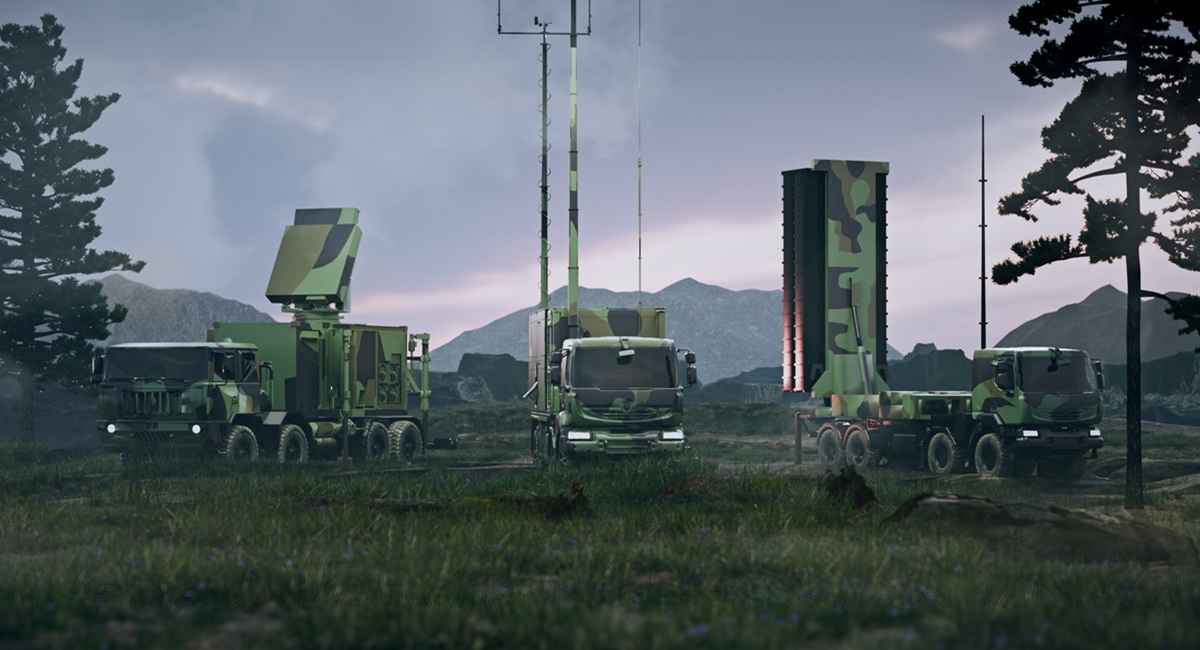 Aster SAMP/T NG vertically launched anti-missile and anti-aircraft weapon system. (Image Credit: MBDA)
UAE Expands Its European Presence
The Middle East also played an increasingly visible role at Eurosatory. UAE-based EDGE Group used the exhibition to announce the establishment of a European headquarters in Paris while unveiling new industrial partnerships across the continent.
The company showcased a wide range of technologies, including autonomous systems, electronic warfare capabilities, and counter-drone solutions.
The move reflects a broader trend in which Gulf defense companies are seeking deeper integration with European markets and industrial networks. Rather than acting solely as buyers of Western equipment, Gulf states are increasingly positioning themselves as technology developers, manufacturers, and export partners.
Israeli Participation Sparks Controversy
While technology and industrial cooperation dominated much of the exhibition, one of the most widely discussed issues involved France's restrictions on Israeli participation.
French authorities barred official Israeli government representatives from attending the exhibition and prohibited the establishment of an Israeli national pavilion. Israeli companies were permitted to participate only if they displayed air defense and missile defense systems, while offensive weapons were prohibited.
The controversy intensified on the opening day when several Israeli company booths were physically boarded up after French authorities determined that the displayed equipment violated exhibition rules. Israeli officials strongly criticized the decision, describing it as discriminatory and politically motivated. French organizers maintained that restrictions were being enforced in accordance with government directives.
The dispute reflected broader tensions in French-Israeli relations and became one of the most politically sensitive issues surrounding the exhibition.
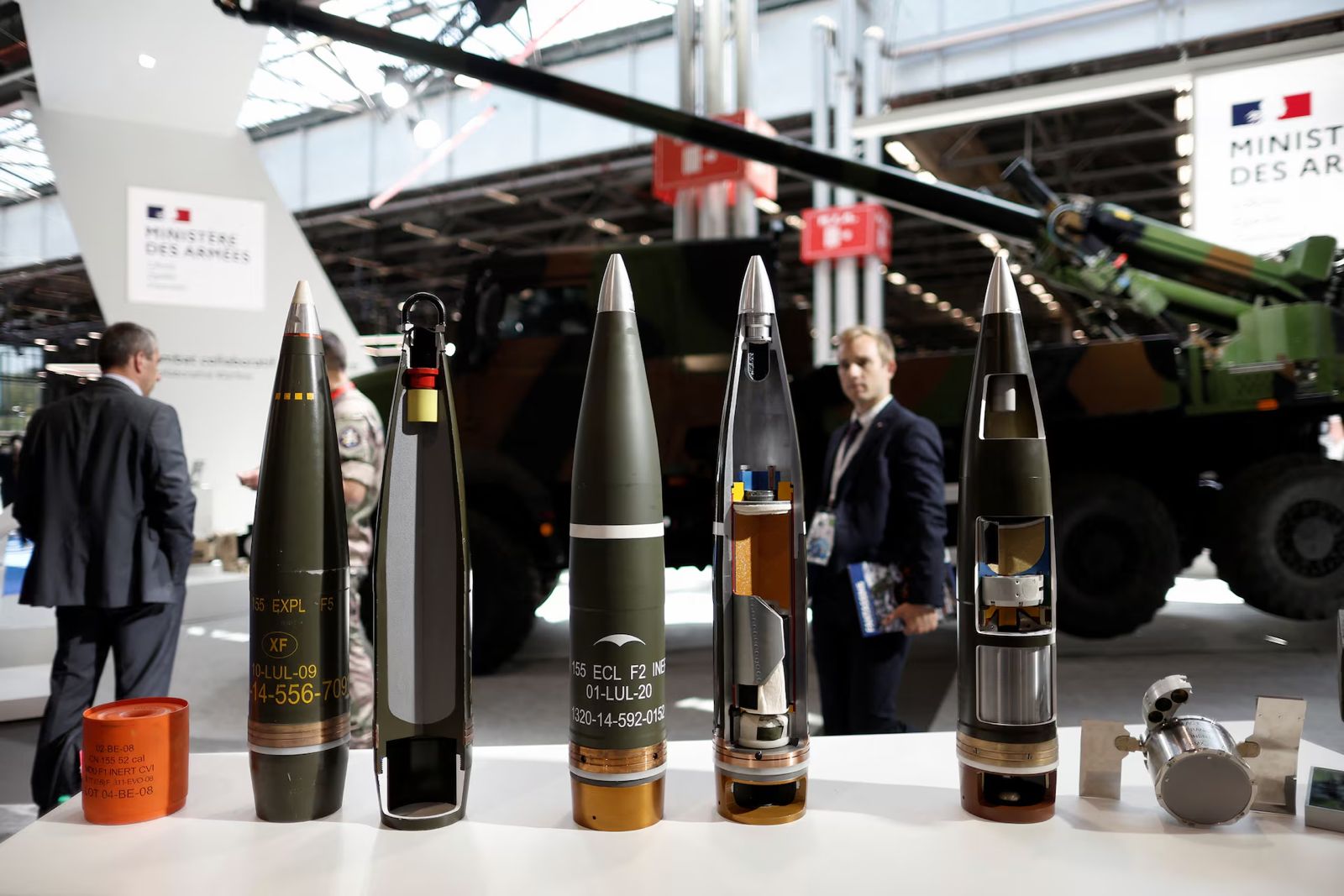 155mm artillery shell cutaways and munitions on the French Ministry of Armed Forces stand at the Eurosatory International Defence and Security Exhibition. (Image Credit: Reuters/Benoit Tessier/via X)
Despite the controversy, Israeli defense firms continued to attract international interest due to their experience in missile defense, counter-drone technologies, and battlefield-proven systems.
Innovation and Start-Ups Gain Momentum
Eurosatory 2026 also highlighted the growing importance of start-ups and emerging technologies. The Eurosatory LAB served as a platform for small and medium-sized enterprises developing next-generation solutions in artificial intelligence, cyber defense, robotics, autonomous systems, and advanced sensing technologies.
Major defense companies increasingly emphasized software, data fusion, artificial intelligence, and autonomous decision-support tools alongside traditional hardware.
Cybersecurity was also featured prominently, as companies showcased integrated cyber-defense platforms designed to protect military networks, command systems, and critical infrastructure against increasingly sophisticated threats.
The growing overlap between digital and physical warfare was evident throughout the exhibition, reinforcing the idea that future conflicts will be fought across multiple interconnected domains.
Defense Financing and Industrial Sovereignty
In addition to technology demonstrations and business agreements, Eurosatory hosted more than 100 conferences and professional sessions addressing strategic challenges facing governments and industry.
Defense financing emerged as a major topic, with policymakers and executives discussing how Europe can fund large-scale rearmament programs while maintaining industrial competitiveness.
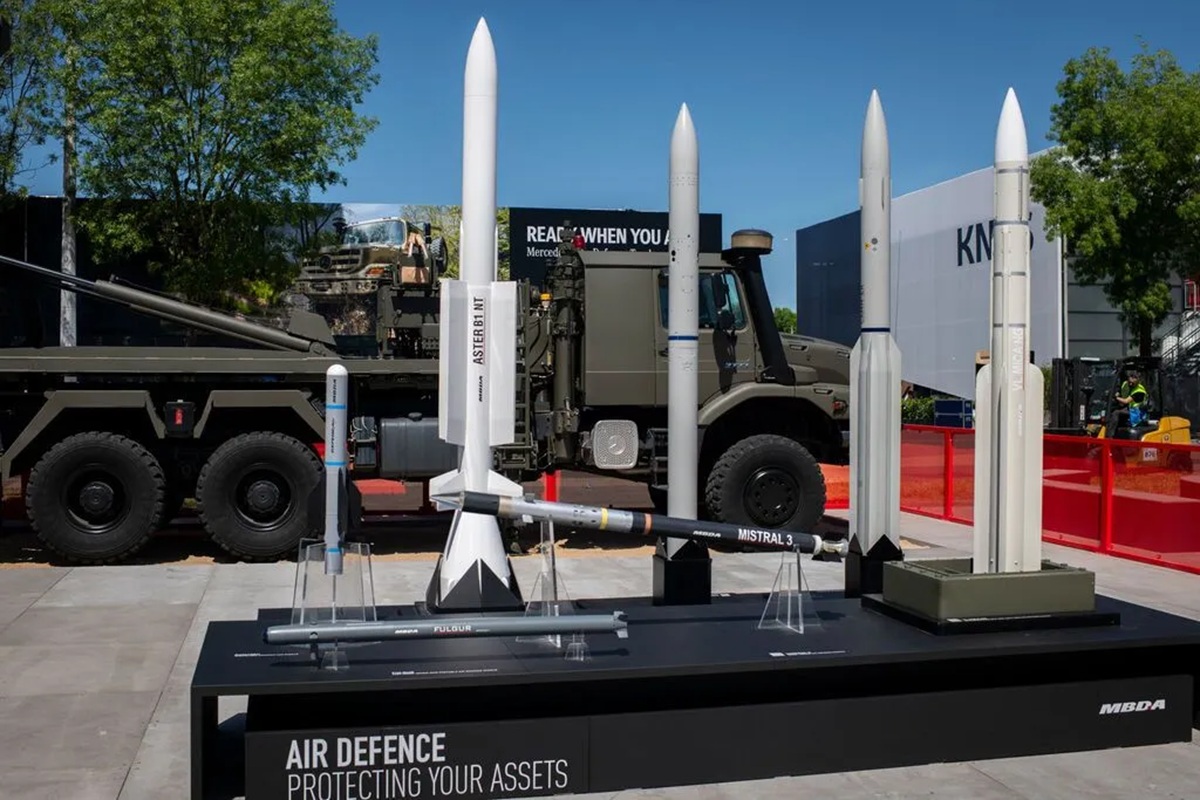 MBDA Systems' Air Defense missiles on display at Eurosatory exhibition. (Image Credit: MBDA)
Industrial sovereignty also received considerable attention. European officials emphasized the importance of reducing strategic dependencies, securing critical supply chains, and expanding domestic manufacturing capacity.
These discussions reflected broader concerns about long-term defense readiness and the need for sustained investment in industrial capabilities.
Future Battlefield
Eurosatory 2026 demonstrated that the global defense industry is entering a new era shaped by lessons from Ukraine, accelerating technological change, and renewed geopolitical competition.
The exhibition highlighted a defense environment increasingly focused on drones, long-range strike capabilities, integrated air defense, electronic warfare, industrial resilience, and multinational cooperation.
Ukraine's unprecedented presence underscored the country's transformation into a key source of military innovation. European defense firms accelerated partnerships aimed at strengthening production capacity and technological collaboration.
The United States and NATO allies deepened efforts to address emerging drone threats. Meanwhile, political controversies surrounding Israeli participation illustrated how geopolitics continues to influence defense trade and international exhibitions.
More than a traditional arms exhibition, Eurosatory 2026 served as a snapshot of how governments and defense industries are preparing for the next generation of warfare. The event confirmed that future military competition will be defined not only by tanks and artillery, but also by drones, networks, artificial intelligence, precision strike systems, and the industrial capacity required to sustain them.
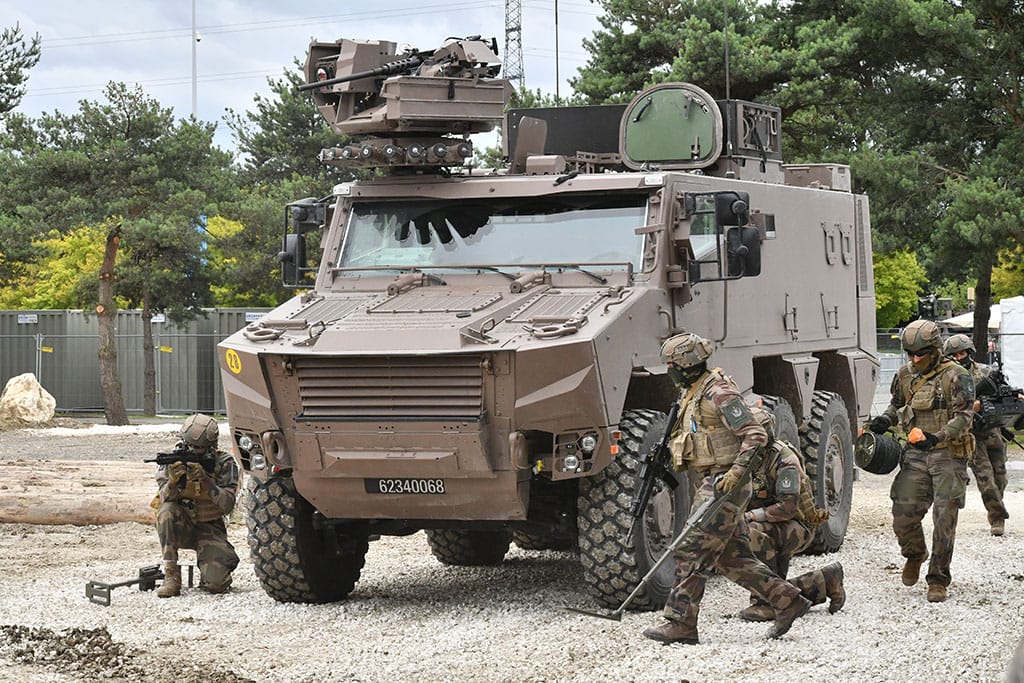 Live demonstration during the Eurosatory Defence and Security Exhibition. (Image Credit: Eurosatory)
ALSO READ:
 Highlights of IDEF Expo 2026
 World’s Top 10 Tactical and Combat Drones
 Top 10 Military Tech and Robotics Companies in the World
 U.S. Integrating Advanced Robotic and Autonomous Weapon Systems into Army Units
Regions




Issues