



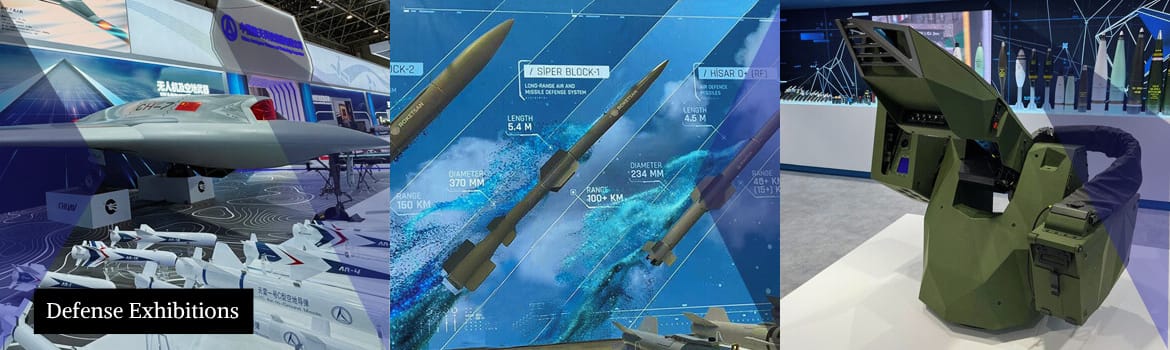



Highlights of Defense and Security Equipment International (DSEI) Exhibition
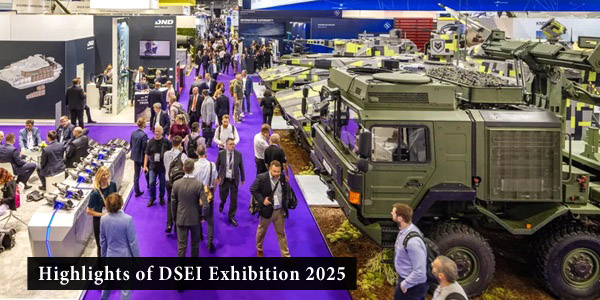
The Defense and Security Equipment International (DSEI) 2025 concluded after four days at London’s ExCeL Centre, reaffirming its status as one of the world’s premier defense and security exhibitions. Running from September 9 to 12, the event drew governments, armed forces, private industry leaders, and international supply chains from across the globe. Together, they examined rising security challenges, explored partnerships, and showcased the latest military technologies.
This year’s edition was particularly significant in the context of ongoing global instability. Persistent conflict in Europe, particularly in Ukraine, coupled with tensions in the Middle East and intensified competition in the Indo-Pacific, underscored the urgent need for innovation, resilience, and multinational collaboration in defense. With these crises shaping defense priorities, DSEI 2025 was not merely an exhibition but a strategic platform reflecting the evolving priorities of armed forces and defense industries worldwide.
Over 60,000 visitors attended the exhibition, including senior government representatives, procurement officials, and military delegations from more than 70 countries. Over 1,700 exhibitors presented their technologies and systems, spanning land, air, naval, cyber, and space domains. Despite disruptions caused by nationwide rail strikes in the UK, attendance remained strong, reflecting the event’s resilience and the critical importance attached to defense preparedness.
Integrated Defense and Emerging Technologies
The official theme of DSEI UK 2025, “Preparing the Future Force,” highlighted the UK Ministry of Defense’s focus on readying armed forces to address current and emerging threats. The theme is structured around three sub-themes: securing advantage, driving advantage, and maintaining advantage, reflecting a holistic approach to capability development. These priorities were mirrored across the exhibition halls in the form of advanced systems, integrated solutions, and workforce initiatives.
Securing advantage emphasizes agile acquisition, resilient supply chains, modular design, and rapid innovation. At DSEI 2025, exhibitors highlighted modular vehicles, drone platforms, and dual-use technologies designed for flexibility in contested environments. Discussions also focused on secure sourcing of critical components, an issue increasingly critical in a world where supply chain vulnerabilities can translate directly into operational risks.
 BAE Systems displayed advanced weapons systems and drones at DSEI 2025 in London, UK. (Image Credit: DSEI UK)
Driving advantage focuses on digital transformation, encompassing artificial intelligence, autonomous systems, cyber resilience, and quantum technologies. Exhibitors showcased AI-enabled decision-support tools, predictive maintenance systems for vehicles and aircraft, advanced electronic warfare systems, and quantum-resilient encryption solutions. These capabilities align with the increasing centrality of digital integration in modern operations.
Maintaining advantage addresses the human dimension, emphasizing workforce readiness, talent retention, training innovations, and human-machine teaming. Panels at DSEI highlighted critical skills shortages across allied nations, the integration of immersive and virtual training platforms, and diversity and inclusion initiatives, including the Women in Defense UK Critical Mass Summit. These efforts underscore that technological superiority alone is insufficient; skilled personnel are essential to fully leverage advanced platforms.
Emerging technologies dominated the exhibition. Autonomous vehicles, swarming drones, integrated command-and-control systems, and multi-domain operational solutions illustrated the convergence of land, air, and naval innovation. Companies also highlighted sustainable solutions, including energy-efficient power systems, alternative fuels, and eco-friendly materials, reflecting the growing importance of sustainability in defense procurement.
Cyber resilience was also a key focus of the event as attendees viewed demonstrations of next-generation encryption and secure communication systems capable of withstanding emerging quantum computing threats. Cybersecurity is increasingly central to modern conflict, and these solutions exemplify how the defense sector is preparing for non-kinetic warfare as well as traditional threats.
Major Exhibitors and Delegations
DSEI 2025 hosted a broad range of national delegations and industrial players. The United Kingdom, as host nation, dominated the exhibition with major firms such as BAE Systems, Rolls-Royce, Thales, and MBDA. These companies emphasized not just cutting-edge hardware, but also systems integration, AI-enabled platforms, and modular, interoperable solutions.
BAE Systems showcased the TRIDON Mk2 air defense system and STRIX precision-strike drone, both designed for contested airspaces requiring rapid adaptation and integrated radar and missile capabilities.
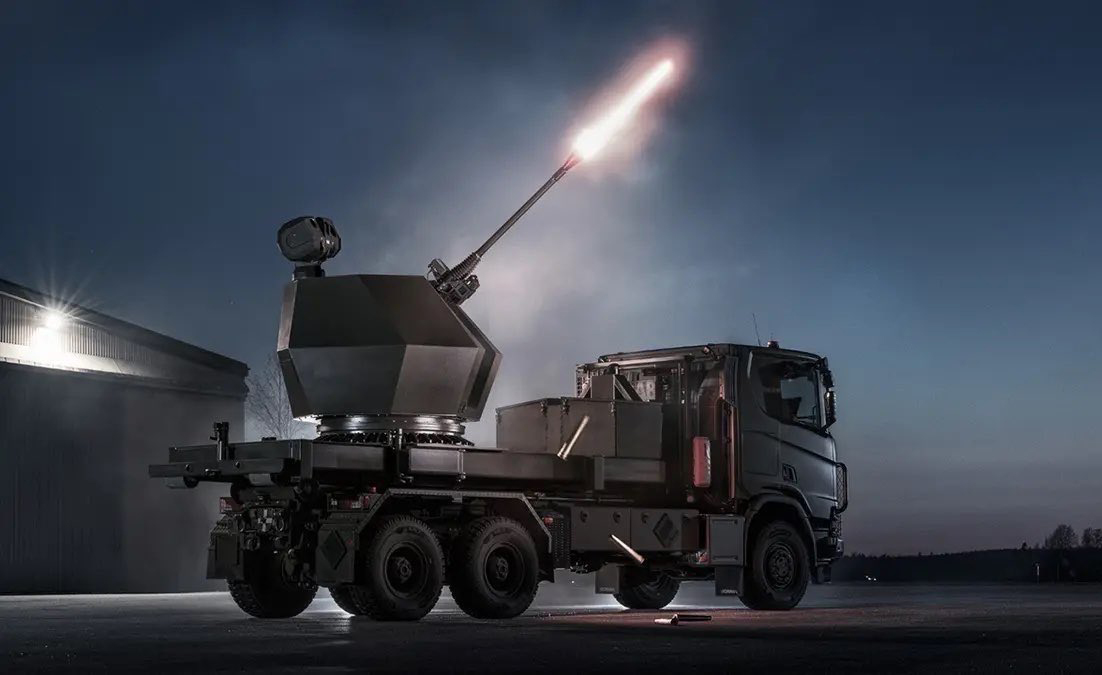 TRIDON Mk2 air defense system. (Image Credit: X/@PlJonson)
Rolls-Royce emphasized next-generation propulsion and power solutions for both air and naval platforms, crucial for future mobility and operational endurance. MBDA highlighted missile systems supporting multi-domain operations, including joint UK-France projects such as the Future Cruise/Anti-Ship Weapon.
Turkey’s Roketsan drew attention with its advanced missile and rocket systems, demonstrating Ankara’s growing capabilities in cost-effective, combat-tested technologies for both export and domestic defense.
Greek firm INTRACOM DEFENSE promoted electronic warfare and communication systems, while Belgian company FN Herstal presented advanced infantry weapons and digital armory management platforms.
German firm Rheinmetall unveiled a Light Tactical Vehicle for the British Army, designed to meet the Land Mobility Program requirements. Rheinmetall also showcased the Fuchs JAGM missile tank destroyer, an export variant of Boxer armored vehicles, and the CT-025 crewless turret for light combat vehicles.
Estonia’s Milrem presented robotic combat vehicles, Portugal’s TEKEVER offered UAV solutions, and Spain’s Arquimea demonstrated drone launchers. From outside Europe, U.S. firm Leidos displayed naval systems tailored for British Commando operations, and South Korea’s Kia and Singapore’s ST Engineering revealed next-generation armored mobility platforms.
India presented a strong delegation led by the Society of Indian Defense Manufacturers and including DRDO and private-sector partners. The India Pavilion, inaugurated by Secretary of Defense Production Shri Sanjeev Kumar, highlighted India’s emphasis on co-development, supply chain integration, and indigenous manufacturing. These efforts align with India’s strategic drive to expand domestic defense manufacturing while participating in global supply networks.
Pakistani defense firms Heavy Industries Taxila (HIT), Pakistan Ordnance Factories (POF), and Wah Industries Limited (WIL) showcased cutting-edge products and platforms, including main battle tanks, armored personnel carriers, and firearms. Pakistan’s National Radio & Telecommunication Corporation (NRTC) showcased its Tactical Area Communication System (TACS).
 Patria TRACKX vehicle at DSEI UK 2025. (Image Credit: Patria Group)
New Weapons and Systems Unveiled
DSEI 2025 featured several next-generation systems representing the priorities of future warfare and the UK’s “Preparing the Future Force” strategy. These systems emphasized modularity, autonomy, digital integration, and sustainability.
• Leidos Sea Dagger: A stealth insertion craft concept for the Royal Marines, featuring autonomous navigation, integrated weapons, AI systems, speeds above 74 km/h, and a 300 km range.
• BAE Systems STRIX Drone: An armed unmanned aerial vehicle capable of precision strikes and extended ISR roles.
• BAE TRIDON Mk2 Air Defence System: A modular platform offering integrated radar and missile interoperability against aerial threats.
• Arquimea GRIFO Drone Launcher: A rapid-deployment system for UAV swarm operations.
• Kia Tasman 4×4 and ST Engineering Bronco 3: New-generation armored mobility vehicles tailored for rugged terrain.
• Indian Advanced Armored Platform-Wheeled: Jointly developed by Tata Advanced Systems Limited (TASL) and DRDO, this modular land vehicle was revealed publicly for the first time.
• TEKEVER AR3 EVO UAV: A long-endurance surveillance drone with payload delivery capabilities.
• Milrem HAVOC 8x8 Robotic Combat Vehicle: An unmanned ground vehicle designed for both reconnaissance and direct combat missions.
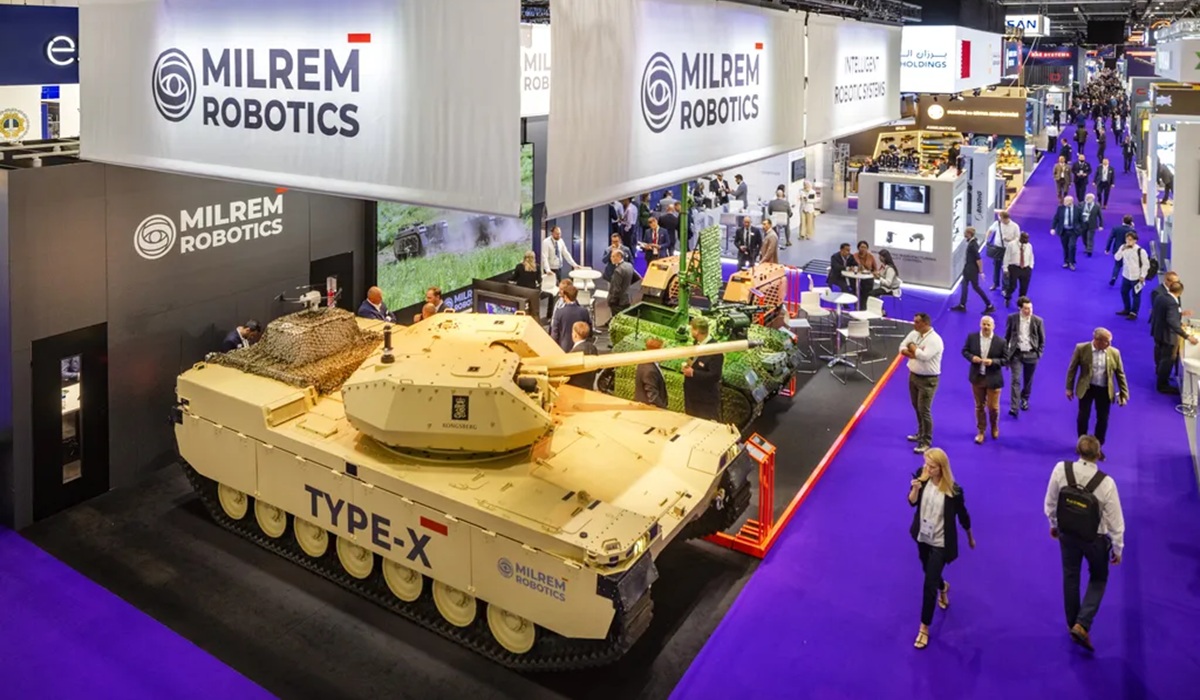 Milrem Robotics is displaying robotic combat vehicles at DSEI in the UK. (Image Credit: DSEI UK)
• FN Herstal Digital Systems: Tools for managing infantry weapons and naval systems.
• Quantum-resilient Encryption Systems: Cyber innovations aimed at countering the future risks posed by quantum computing.
• ZeroAlpha Solutions Sustainable Power and Lighting: Eco-friendly military infrastructure technologies.
Live demonstrations, including naval unmanned systems and integrated air defense simulations, gave visiting delegations hands-on exposure to these new technologies.
Major Announcements and Strategic Deals
Several announcements underscored DSEI 2025’s strategic importance beyond equipment displays. The Global Combat Air Program, a collaboration among the UK, Italy, and Japan, provided updates on the development of sixth-generation fighter aircraft aimed at operational deployment in the mid-2030s.
Progress on the UK-France Future Cruise/Anti-Ship Weapon project highlighted the development of stealthy, multi-platform-compatible missile systems. The Royal Navy announced expansion plans for unmanned aerial vehicles, enhancing maritime surveillance and strike capabilities. Denmark confirmed acquisitions of long-range weapons to strengthen NATO’s eastern flank, while UK-India discussions explored co-production of missile and engine technologies.
These developments reflect a global trend toward long-term rearmament, AI-driven systems, UAVs, and precision strike technologies, with governments and industries aligning strategies to maintain competitive advantage in contested environments.
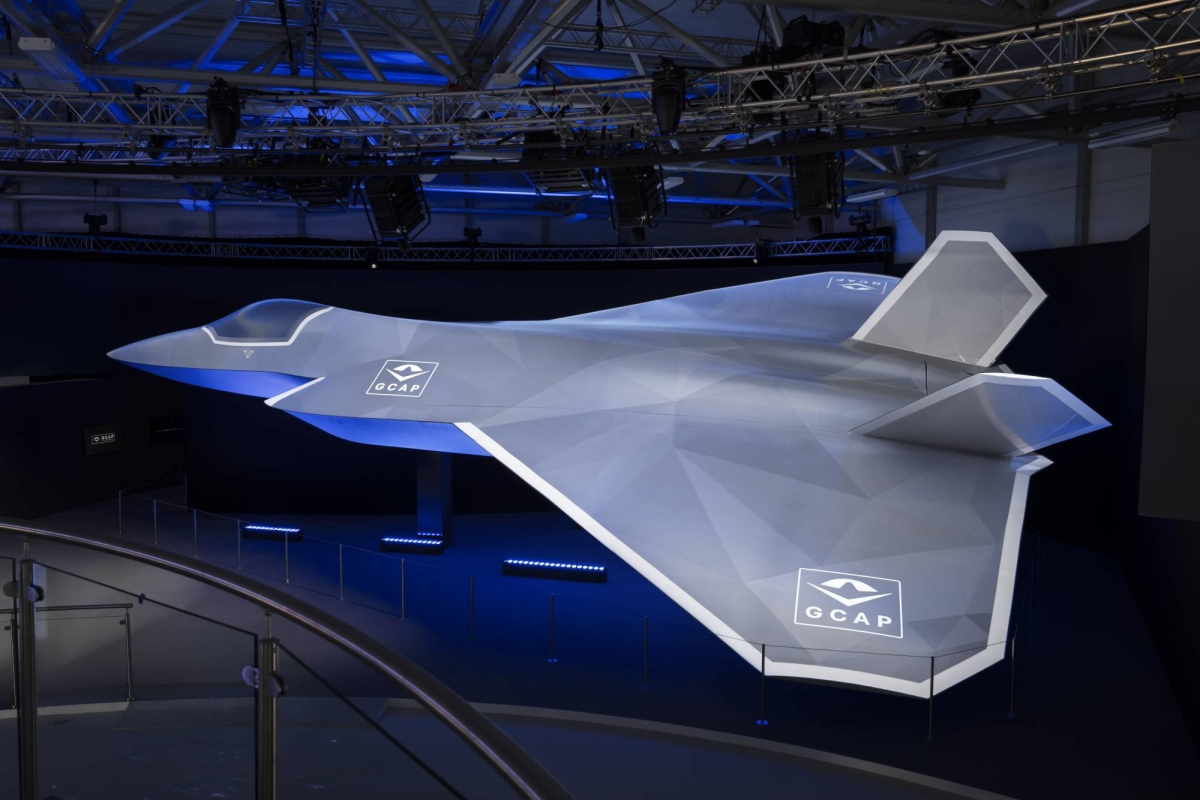 A full-scale model of the innovative conceptual design for the GCAP supersonic jet was showcased at the aerospace exhibition in Tokyo. (Image Credit: BAE Systems)
Theme and Forums
DSEI 2025 emphasized the UK’s official theme of “Preparing the Future Force,” which provides a framework for understanding the event’s strategic messaging. The theme is designed to ensure that armed forces are agile, technologically advanced, and capable of responding to future threats. The three sub-themes, securing advantage, driving advantage, and maintaining advantage, highlight the integration of technology, workforce readiness, and operational resilience.
The forums covered a wide range of topics, including maritime, land, air, joint operations, space, security and special operations, and future technologies. These sessions allowed participants to explore cross-domain challenges, share operational insights, and discuss collaborative approaches to procurement and capability development. The forums also reinforced the focus on digital transformation, innovation, and sustainability across defense sectors.
DSEI Connect, the digital platform, complemented the physical exhibition by providing additional engagement opportunities for attendees and exhibitors, further emphasizing global collaboration and knowledge sharing.
Strategic significance
DSEI 2025 demonstrated that future warfare will be defined not only by technology but by integration, adaptability, and resilience. The convergence of autonomous systems, AI, cyber resilience, sustainable practices, and modular platforms illustrates a shift toward multi-domain operations where agility and interoperability are paramount.
The event also highlighted the human dimension of defense. Workforce readiness, training innovation, and talent retention are increasingly recognized as critical factors in achieving operational success. Partnerships between governments, industry, and academia are essential to maintain a skilled and adaptable force capable of leveraging advanced technologies.
The participation of over 70 nations reinforced DSEI’s role as a strategic platform for defense diplomacy, cooperation, and industrial collaboration. As conflicts reshape military priorities in Europe, the Middle East, and the Indo-Pacific, the event offered a clear view of how nations and industries are preparing for contested environments. The integration of the UK’s official theme and forums within DSEI underscores the alignment of strategy, policy, and capability development, providing a roadmap for the future force.
 Military vehicles and drones on display at DSEI 2025 in London, UK. (Image Credit: DSEI UK)
ALSO READ:
 Highlights of IDEF 2025
 Top 10 Military Tech and Robotics Companies
Regions




Issues